
What a personal operating system actually is
Sharing how it works for me today

Everyone, at some point in their career, has wished for an assistant. Donna from Suits, if you’ve watched it. Better still, a team of them, each expert in something different. One who understands your industry. One who reads your drafts before anyone else. One who notices you have skipped training for the second week.

© Suits
Most AI users are running a chat window, getting better at prompts, and quietly concluding the technology is overhyped.
The reason your experience of ChatGPT or Claude feels shallow is not the model. It is that you are running it with no context, no memory, and no skills, and nobody has told you those are separate layers you have to build.
The model is the engine, not the car.
Personal operating system instead of an assistant
If you’re not Harvey from Suits and there is no Donna to help you, the old world gives you four options. Search it. Message a friend. Get a paid advice. Trust your gut.
Last week I had three questions. Whether my car engine DPF is on the way out. Whether the article I was about to schedule had a strong hook. A third about whether the pain in the foot meant I should skip my next triathlon.
In the new world I’ve asked the expert council of Audi technicians. Then the editors. Then the physio. They had context on me. They have read every service log, my last articles, and my medical history. They each replied in a paragraph. I made three decisions. Quick, no stress.
This is my reality now. People are calling it a personal operating system. Below is what mine looks like under the hood.
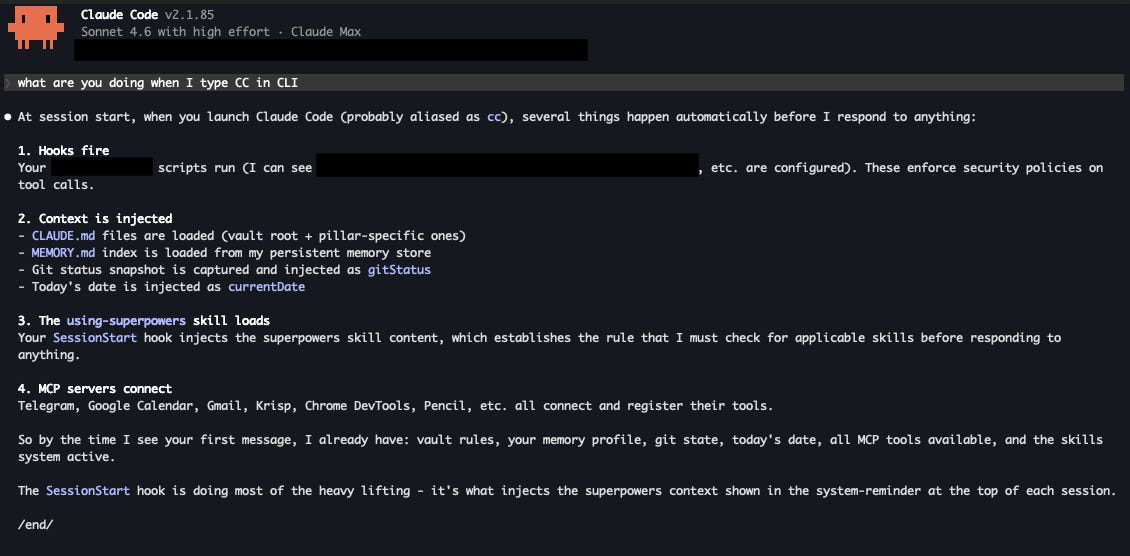
A useful personal operating system has four parts. Skip any one and the whole thing feels like a clever toy.
The model. The thinking engine. Claude, ChatGPT, Gemini. The part most people stop at. Necessary. I recently switched from ChatGPT to Claude, mainly for privacy.
Context. The model has to know who you are. Your personality, your goals, your constraints, what you tried last month and abandoned. Without this, every conversation starts from zero. And not just your work. It could be anything: getting ready for a race, sorting out nutrition, choosing a car, refreshing the garden, learning crochet. With context, the assistant becomes the friend who has known you for years and remembers what you said in March. Mine knows my car’s full service history, my driving pattern, and the OBD readings from my commute.
Memory and knowledge. A place the assistant reads from and writes to. Your notes, your previous decisions, your project documents. The corner of your laptop or cloud that becomes its brain. Skip this layer and you start fresh with a clever stranger every morning. I started with Notion, then moved to Obsidian.
Skills. Specialised agents tuned for the things you actually do. One of mine is a maintenance and buying expert that knows the trade-offs between gearbox types, diesel, petrol, hybrid and electric - and how commute mileage shifts an engine’s expected life. Another is a panel of editors who tear my drafts apart along storytelling, evidence, voice, and density. There is one for private health questions. New skills join when a new bottleneck shows up.
Skills turn a chatbot into a team.
Mine, today
Two years in, this is what mine actually looks like.
The brain is a folder of about 400 notes, organised across six pillars including content, learning, self, etc. Plain text. Searchable from anywhere.
The execution engine is Claude Code, a command-line AI that reads the folder and dispatches work to specialised agents I have written. Around forty of them now, each scoped to a single job. From route incoming items to the right pillar, working on them - to cleaning up the vault.
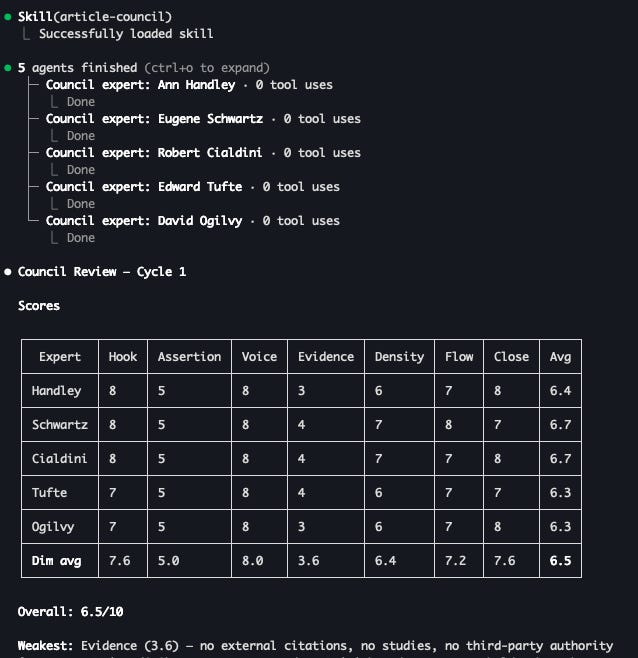
A favourite is the council. You gather any experts you want, run them in parallel, and have them brainstorm or stress-test anything in two minutes flat. The article you are reading went through five of them, scored across seven dimensions. Three of those experts said the close was weak. I rewrote it. And on evidence I’ve included screenshots.
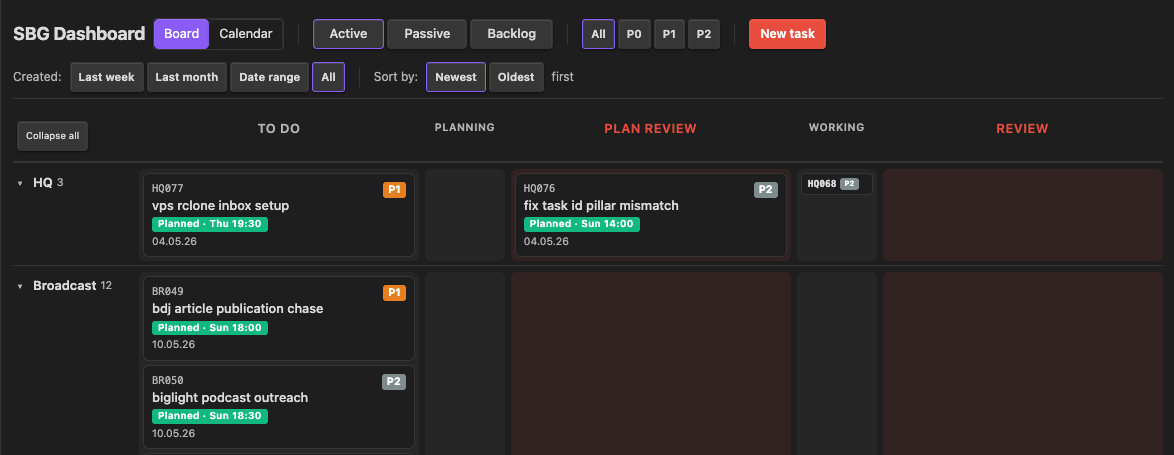
When I started, the academy I was in set a task: build something to replace a SaaS tool you depend on. So I built a custom dashboard, an Obsidian plugin, to replace Linear and Notion. It shows my tasks, my calendar, and the notes attached to each one. I rent a small server for $6/month that captures messages I send from my phone to a private bot and turns them into structured input. Dictate a thought on a walk; find it sorted into the right folder when I am home.
Most of this I built one weekend at a time, usually after the absence of a layer became the bottleneck.
What it looks like in motion
I ask the car expert council one Sunday: “service interval coming up, anything I should watch?” It cross-references the OBD readings against known weak spots for that engine, flags two patterns worth checking, lists the parts to bring, and estimates quotes for three garages within ten miles. Question to plan, under a minute. That is what context plus memory plus skills produces. The model alone gives you a stranger guessing.