
Two weeks of building with AI taught me more than a year of reading about it.

I’d been an AI tourist for a year and didn’t know it.
I had opinions about different models. Read every article and report. Shared AI highlights in this newsletter, but always felt a bit of an imposter. I used ChatGPT daily, then Copilot, then got a Claude subscription for personal topics. Felt productive.
I hadn’t built a single thing. And I’m not a developer - so I assumed building wasn’t for me.
Going hands-on
In early March, I decided to change that. I joined a two-week hands-on AI sprint: six evening and weekend workshops where you show up with a terminal open and leave with working systems. Not a prompt engineering course. Not theory. Building.
The first session introduced a 6T framework: six categories for deciding what’s worth automating.
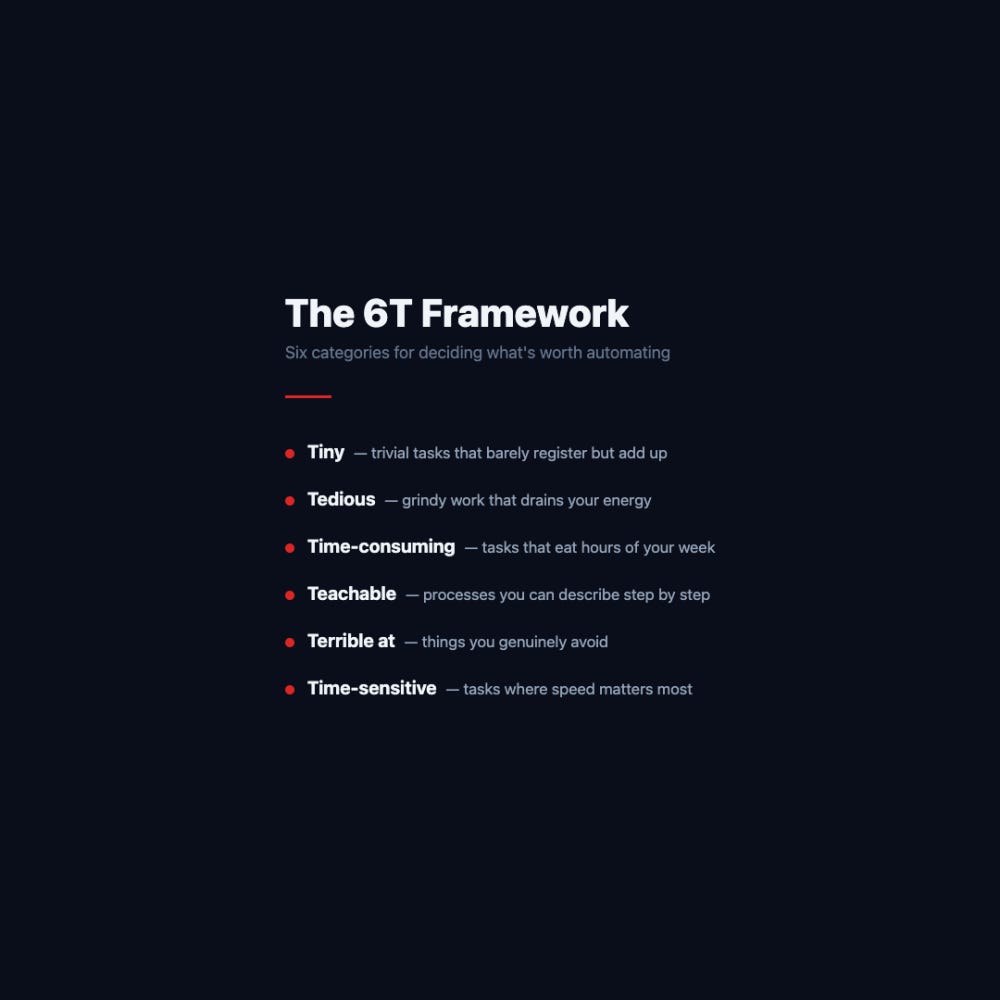
I mapped my own routines against these six categories. The result was humbling: I’d been using AI almost exclusively for two categories - rewriting emails, summarising articles, doing a smart ‘AI search’ - while ignoring the Terrible at, Teachable and Tedious work that was actually eating my time and energy.
What two weeks produced
In 3 weeks I built:
A personal knowledge system that automatically syncs my calendar, private meeting transcripts, and notes into a single searchable base.
AI expert councils - multiple advisors that independently analyse a decision and surface disagreements before I commit.
A health coach app that went from idea to working bot and Android app with real users in a single weekend. Friday evening to Sunday evening. Nine people tried it - and I’m not exaggerating the timeline.
I built all of it by describing what I wanted in plain English and letting the AI write the code, then reviewing and iterating. Sounds easy, but it went more complicated - on a non-technical side.
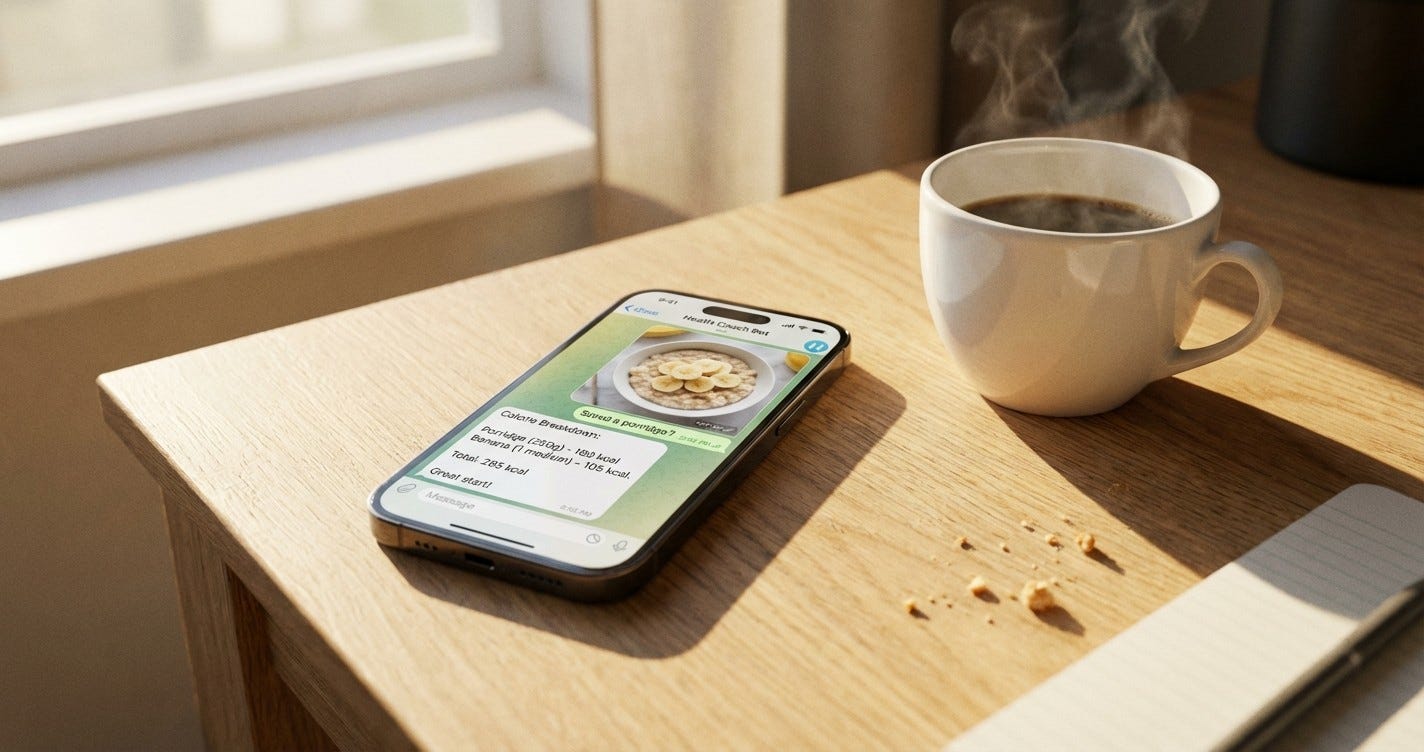
Over a weekend I managed to build a bot, which based on photo tracks food eaten to convert it into calories. And then offsets versus calories burnt - based on Apple Health data. So you can see are you on track to gain / lose weight.
The real shift wasn’t technical
Here’s what surprised me. The technical skills were a rough learning curve with an almost immediate and very deep valley of despair - but the full hands-on approach helped me get out of it fast. The hard part was rewiring how I think about work.
Before the sprint, I thought about AI as a tool. You open it when you need it. You close it when you’re done. Like Excel, but smarter.
After building a personal operating system, I think about AI as infrastructure or system. It runs continuously. Sync agents pull data when you design them to. Triage systems sort and prioritise tasks. AI expert panels debate decisions in parallel while you make coffee.
I stopped thinking of myself as someone who uses AI and started thinking of myself as someone who specifies what should happen - then reviews whether it did.
The sprint organisers call this the operator model. You’re not using tools. You’re managing a team. The moment that clicked, everything about how I approach work changed. Now it feels not too different to years of my previous experience - but just now with AI agents, not people.
The distance is growing
Two weeks of hands-on building taught me something a year of reading never could. The gap between understanding AI and using AI isn’t knowledge. It’s not access to tools. It’s not technical skill.
It’s the willingness to stop being a tourist and start being a builder.
I ran an AI readiness assessment on 1,500-person organisation as part of the programme. The score: “Exploring.” The gap wasn’t technology - it was mindset. And most professionals I know are in the same place I was in February: well-read, well-opinioned, building nothing.
The sprint didn’t teach me about AI. It forced me to use it until the mental model shifted.
If you’re still reading about AI instead of building with it, the distance between you and the people who are building is growing every week. Not because they know more - because they’ve started.
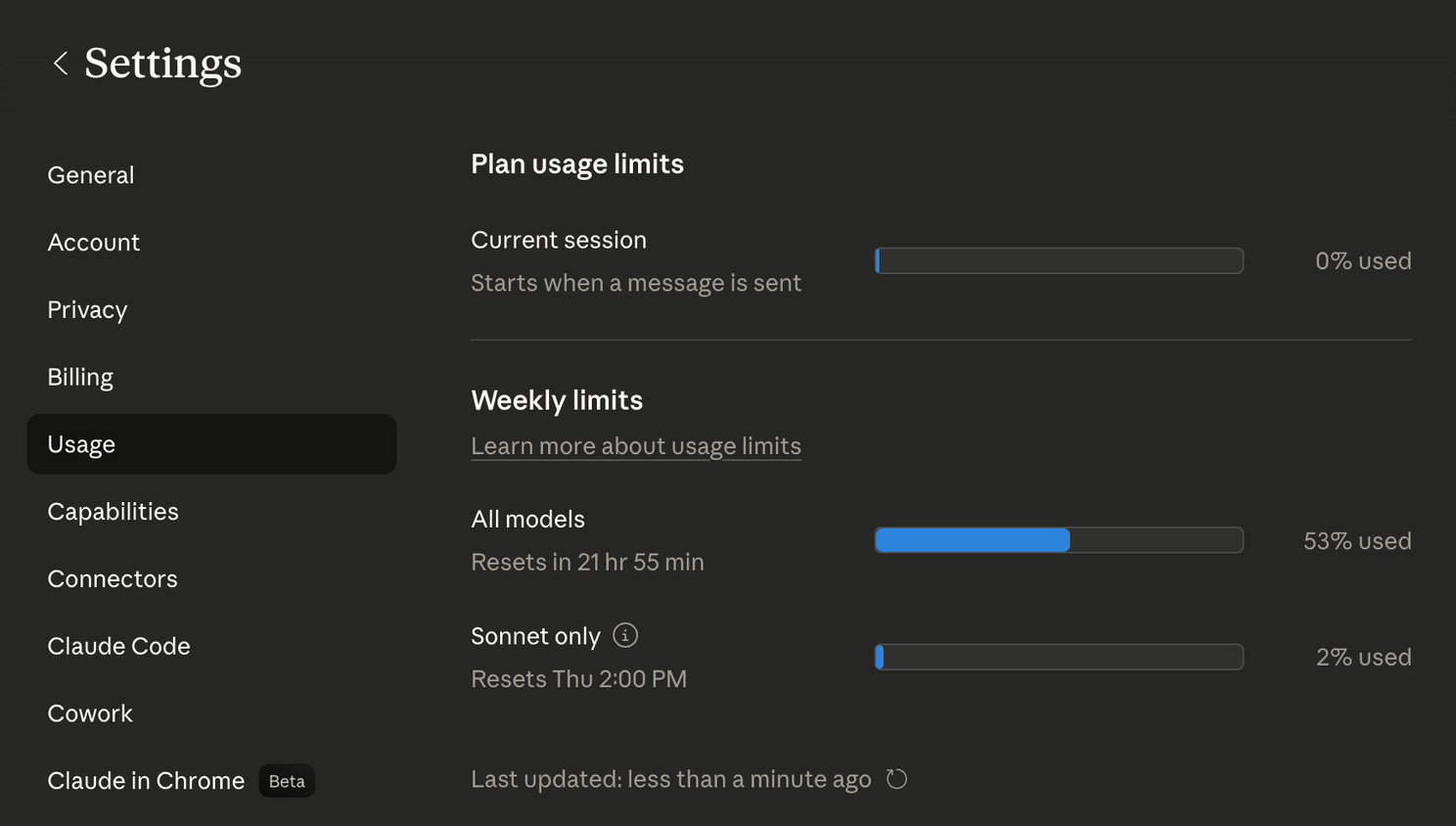
One practical step: get a frontier model subscription and use it until you hit your daily limit. You will not be able to avoid learning by doing. If you could hit a ceiling of a Claude Code Max - you’ll get there.
What’s the first thing in your work you’d automate if you gave yourself permission to actually try?