
💻 Tiny model beats giants, 🌍 Anthropic loses a scientist to politics, 💊 Robots revive old drugs

October 21, 2025. Inside This Week:
• Tiny model from Samsung outsmarts DeepSeek and Gemini on a laptop.
• Anthropic loses top researcher over anti-China policy.
• AI and robots boost drug precision by 43%.
• Plus: MrBeast vs AI videos, Tencent climbs AI ranks, and Deloitte automates 470k jobs.
💻 Tiny model beats Gemini and DeepSeek - on a laptop
✍️ Essentials
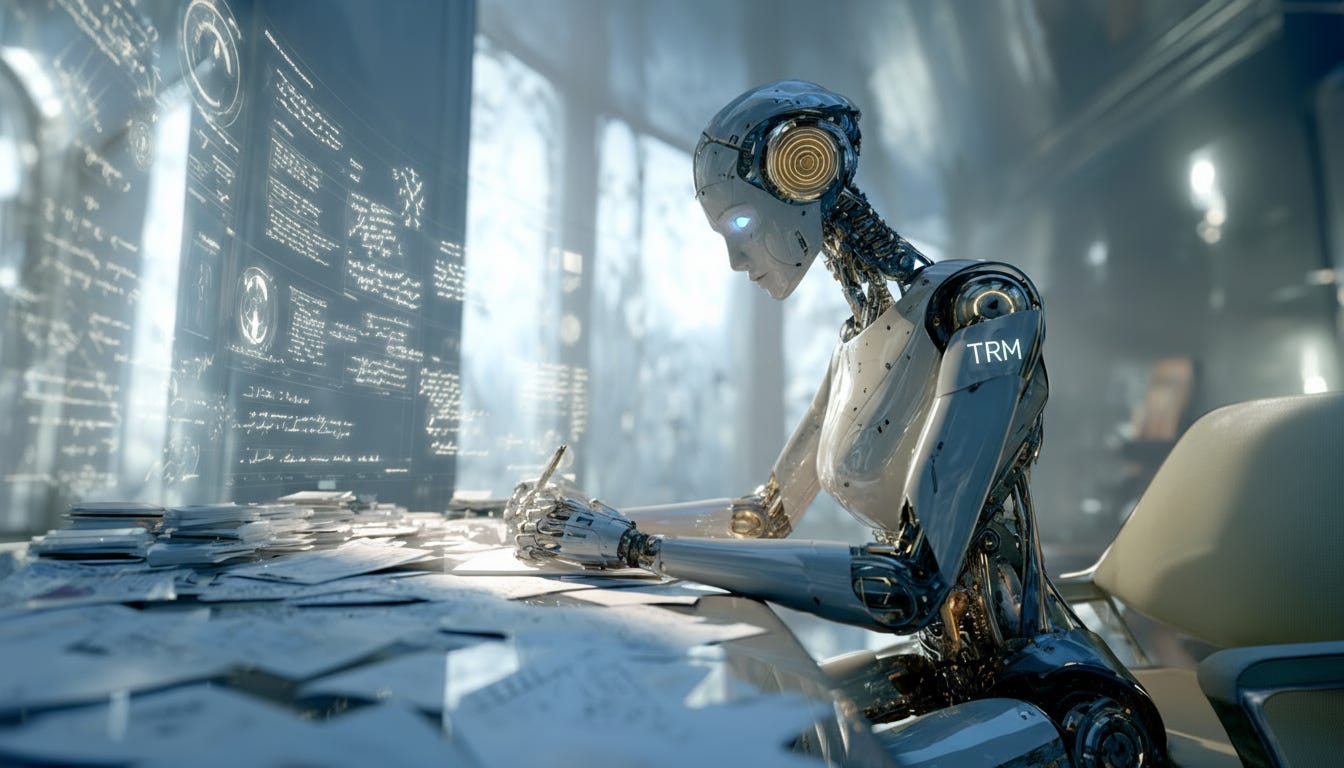
A small model called TRM (Tiny Recursion Model) from Samsung just outperformed giants like DeepSeek R1 and Gemini 2.5 Pro on some of the hardest logic tests - with only 7 million parameters and no GPU.
Instead of generating tokens step by step, TRM drafts a full answer, critiques itself, and iterates up to 16 times. Each cycle includes six internal self-review loops before the model finalizes an improved version.
On ARC-AGI-1, TRM scored 45%, and 8% on ARC-AGI-2 - levels considered brutal even for top-tier LLMs with hundreds of billions of parameters. These benchmarks measure reasoning and generalization, not memorization.
Context:
ARC-AGI is built by François Chollet to test reasoning under unseen conditions - brute-force learning doesn’t work. TRM’s result is like a pocket calculator beating NASA in chess. Gemini 2.5 Pro has 540B parameters; TRM - just 7M.
🐻 Bear’s take
For businesses: architectures matter more than scale. You could save $10-100M in compute and training if you use TRM-like recursive logic models instead of billion-parameter monsters.
For investors: the “bigger = smarter” thesis is cracking. Tiny, self-correcting systems could kill the inference-as-a-service market.
For users: imagine GPT-level reasoning running offline on your phone - no cloud, no latency, no subscription.
🚨 Bear in mind: who’s at risk
Big LLM Labs (Google, DeepSeek, OpenAI) - 9/10. Massive spend, little gain. Start investing in reasoning-first architectures.
Nvidia - 7/10. If inference moves to smaller models, demand for cloud GPUs drops. Time to pivot toward edge compute.
🌍 Top researcher quits anthropic over anti-China policy
✍️ Essentials
Yao Shunai, physicist and key contributor to Claude 4 and Claude 3.7 Sonnet, quietly left Anthropic - and joined Google DeepMind.
In his farewell post titled “it is better without you”, he said 40% of his decision was political: Anthropic’s policy blocks access for subsidiaries from “hostile countries” like China.
Yao’s research shaped core reasoning modules in Claude. But realizing Chinese AI startups couldn’t access Anthropic’s APIs - and that researchers with Chinese ties were being informally sidelined - he left for a company with “fewer political walls.”
Context:
In March, Anthropic officially restricted API access for companies from nations deemed politically unfriendly to the U.S. The policy effectively created a digital wall in AI talent flow - and Yao’s post was the first major public pushback from a senior researcher.
🐻 Bear’s take
For companies: global AI teams may fracture over access and politics. Losing top minds for policy reasons costs more than any API deal.
For investors: compliance is now a talent risk. National restrictions could drain entire R&D pipelines.
For individuals: the AI world is splitting by borders. The open-science ideal is fading into regional silos.
🚨 Bear in mind: who’s at risk
Global AI Talent Market - 8/10. Ideological segregation begins. Prepare for a divided ecosystem and restricted collaboration.
Everyone - 7/10. Politics now lives inside your code editor. This is a new kind of cold war - fought in hiring, ethics, and APIs.
💊 AI and robots revive failed drugs - +43% accuracy in delivery
✍️ Essentials
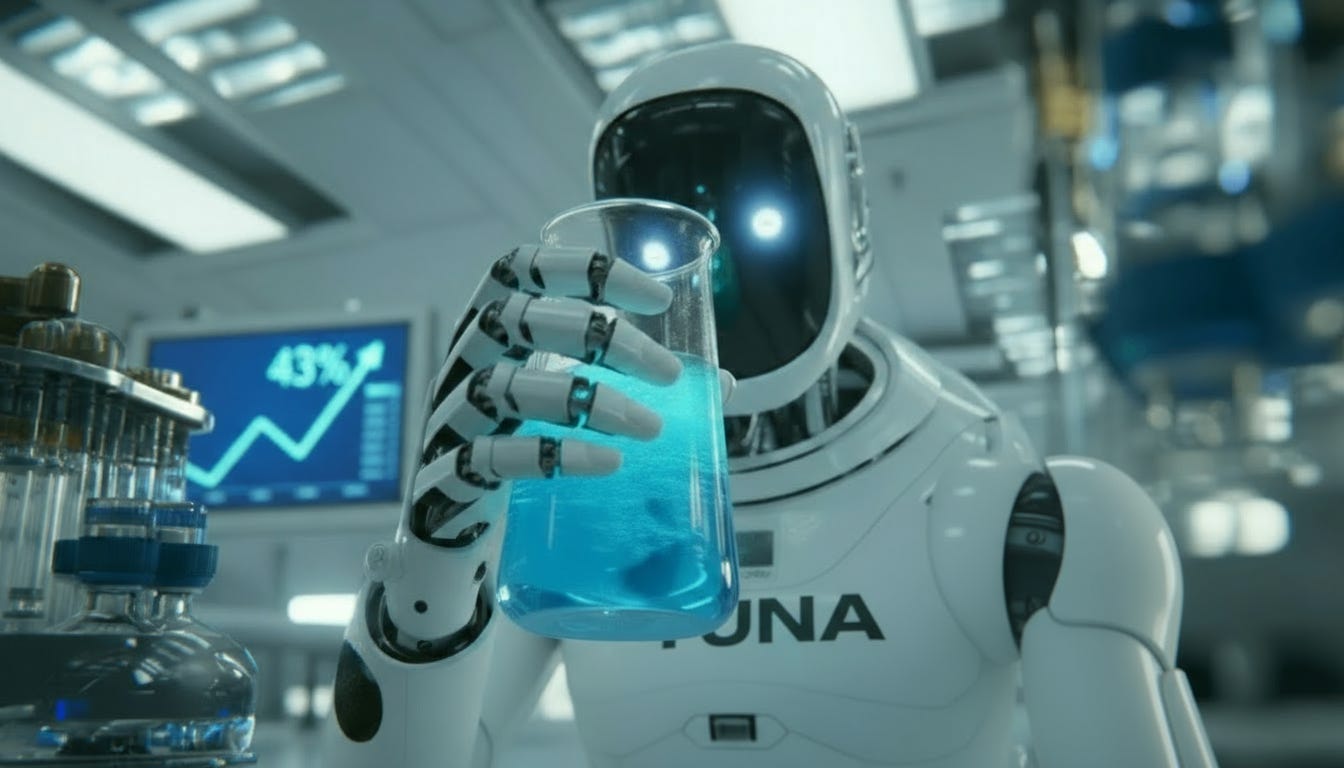
At Duke University, scientists merged robotics and AI to create TuNa, a system that automatically mixes nanoparticles for drug delivery.
In trials, TuNa tested 1,275 combinations, improving success rates of nanoparticle design by 43% compared to human chemists. It even rescued failed leukemia drugs by packaging them into new nanoshells that reached cancer cells effectively - with 75% less toxicity.
Context:
90% of drugs fail not because they “don’t work” but because they can’t reach the target cells. The global drug delivery market exceeds $200B, and TuNa’s multi-parameter optimization solves both composition and ratio - something humans can’t do at speed.
🐻 Bear’s take
For pharma: drugs like Cytarabine or Doxorubicin - once discarded - may re-enter clinical pipelines. TuNa automates the hardest phase of formulation.
For investors: each drug traditionally costs $1-2B and 10 years. TuNa cuts months to days. That’s billions saved - and new IP born.
For patients: therapies that used to fail mid-trial may soon actually cure cancers, faster and with fewer side effects.
🚨 Bear in mind: who’s at risk
Big Pharma Without AI - 8/10. Manual R&D can’t compete with self-optimizing robots. Automate or become obsolete.
Traditional Clinical Labs - 7/10. Linear methods can’t match TuNa’s pace. Either evolve or become outsourced.
Quick Bites
Google expands AI try-on - Shoes now included. eCommerce turns into AI showrooms; no visuals = no sales.
MrBeast warns of “Scary times” - Says millions of creators will lose meaning as AI videos dominate attention.
IBM integrates claude across enterprise tools - 6,000 employees saw +45% productivity boost.
Tencent’s hunyuan-vision-1.5 ranks #3 - China joins the top tier of multimodal AI.
Sora hits 627K installs in a week - Surpassing ChatGPT’s early growth; video > text generation now.
Deloitte adopts claude for 470K staff - Automating reports, decks, and briefs.
Anthropic expands to India in 2026 - Second largest Claude user base after the US.
xAI’s grok imagine v0.9 debuts - Adds synced sound and camera motion; direct Sora rival.