
The biggest live AI deployment - FIFA 2026.
This year FIFA handed every one of the 48 teams the same tool - Football AI Pro. Let's look under the hood.

For about a hundred years, the gap between a rich football nation and a poor one was not just wages and academies. It was knowledge. The big federations could afford armies of analysts cutting video, modelling opponents, turning a season of matches into a tactical edge.
This year FIFA handed every one of the 48 teams the same tool and switched the gap off. That is the part of this World Cup worth paying attention to, and it has almost nothing to do with football.
The tool they all got
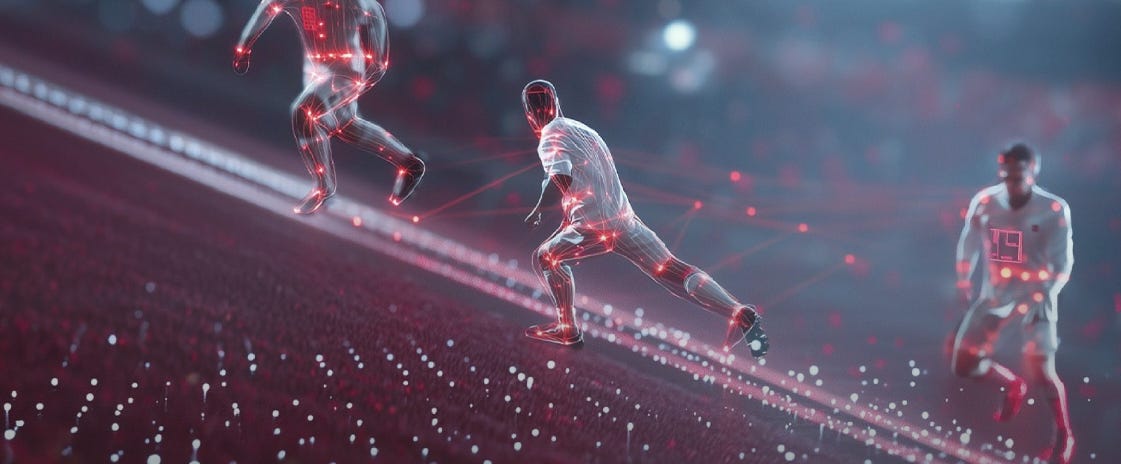
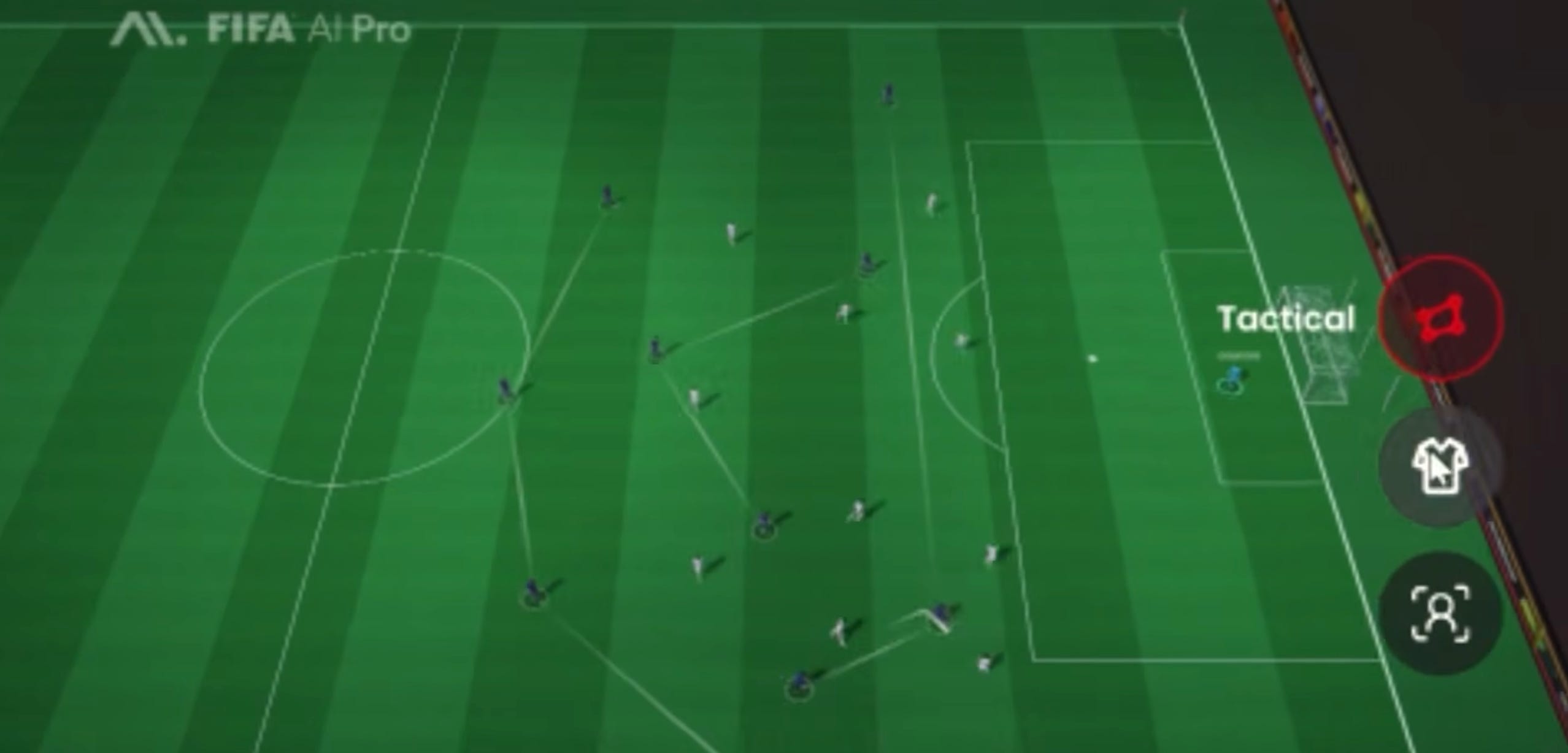
It is called Football AI Pro, built by Lenovo on top of FIFA’s own “Football Language model”, a system trained on decades of FIFA match data, thousands of teams, petabytes of tracking and tactical history. A coach types a question in plain language, in one of many supported languages, and a cluster of AI agents goes and answers it: how does this opponent defend corners, where do they press, what happens to their shape when they chase a game. Out comes text, video clips, and 3D visualisations, in seconds. The one rule is that it cannot be used during live play, so the calls on the day still belong to people.
The most expensive, most exclusive capability in the sport, the thing that used to cost millions and separate the haves from the have-nots, had just been handed to everyone at once, for nothing.
None of this is charity
Handing every team the same tool is itself the power move, and to see why, look at what sits underneath it.
This is the largest live deployment of AI ever attempted, running across refereeing, broadcast, analytics, security and fan apps at once, in 16 stadiums across three countries. The Adidas ball reports its motion 500 times a second. Sixteen Hawk-Eye cameras per stadium pull more than 150 million data points out of a single game. A match-critical call has a latency budget measured in milliseconds. That’s why it is too tight for a round trip to the cloud, so the urgent thinking runs on Lenovo servers inside each stadium, at the edge, next to the pitch (!).
And the people who own it paid handsomely to be there. A technology company now sits in FIFA’s top ring of Global Partners, alongside Adidas, Coca-Cola and Visa, a slot that did not used to exist. That company is Lenovo.
Chinese brands alone are estimated to have put around half a billion dollars into a World Cup their national team did not even qualify for. They are not paying for awareness. They are paying for proof. It is the demonstration that its AI can carry the most unforgiving live event humans stage. The most valuable AI advertising of the year was not an advert. It was the thing working in the background while you watched a match.
Watch how the AI ran underneath this World Cup in the official Lenovo video:
And all use-cases I’ve found are below. And the visuals below are from it too.
Where AI was used at the 2026 FIFA World Cup
Almost everything below runs on Lenovo (FIFA’s Official Technology Partner) plus Adidas (ball), Sony Hawk-Eye (optical tracking), Verizon (networks) and Google (Gemini fan/team features).
1. Officiating (decisions on the pitch)
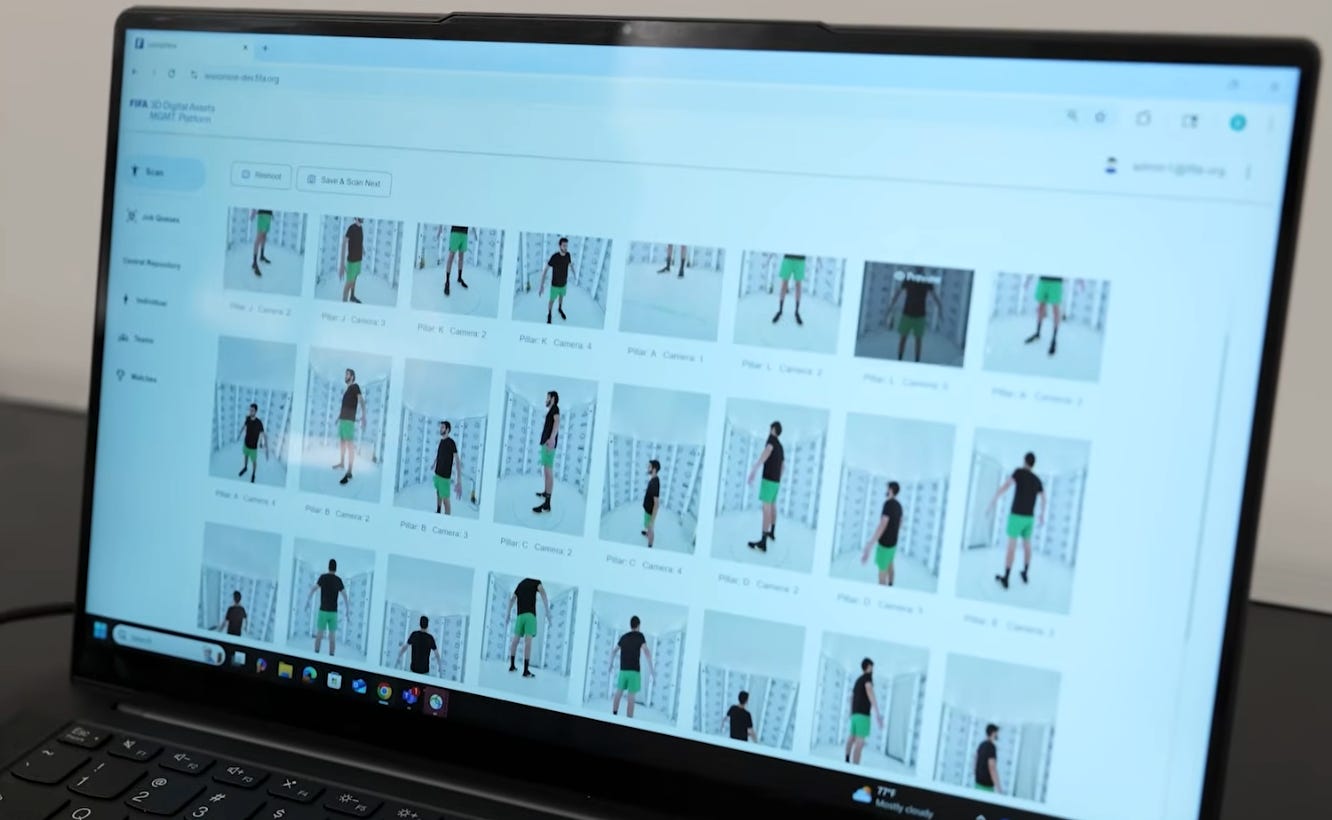
Digital twin of every player. All 1,248 players 3D-scanned into precise avatars, fed into the offside system and broadcast replays so it is obvious which limb is involved. Lenovo GenAI 3D avatars + real player data.
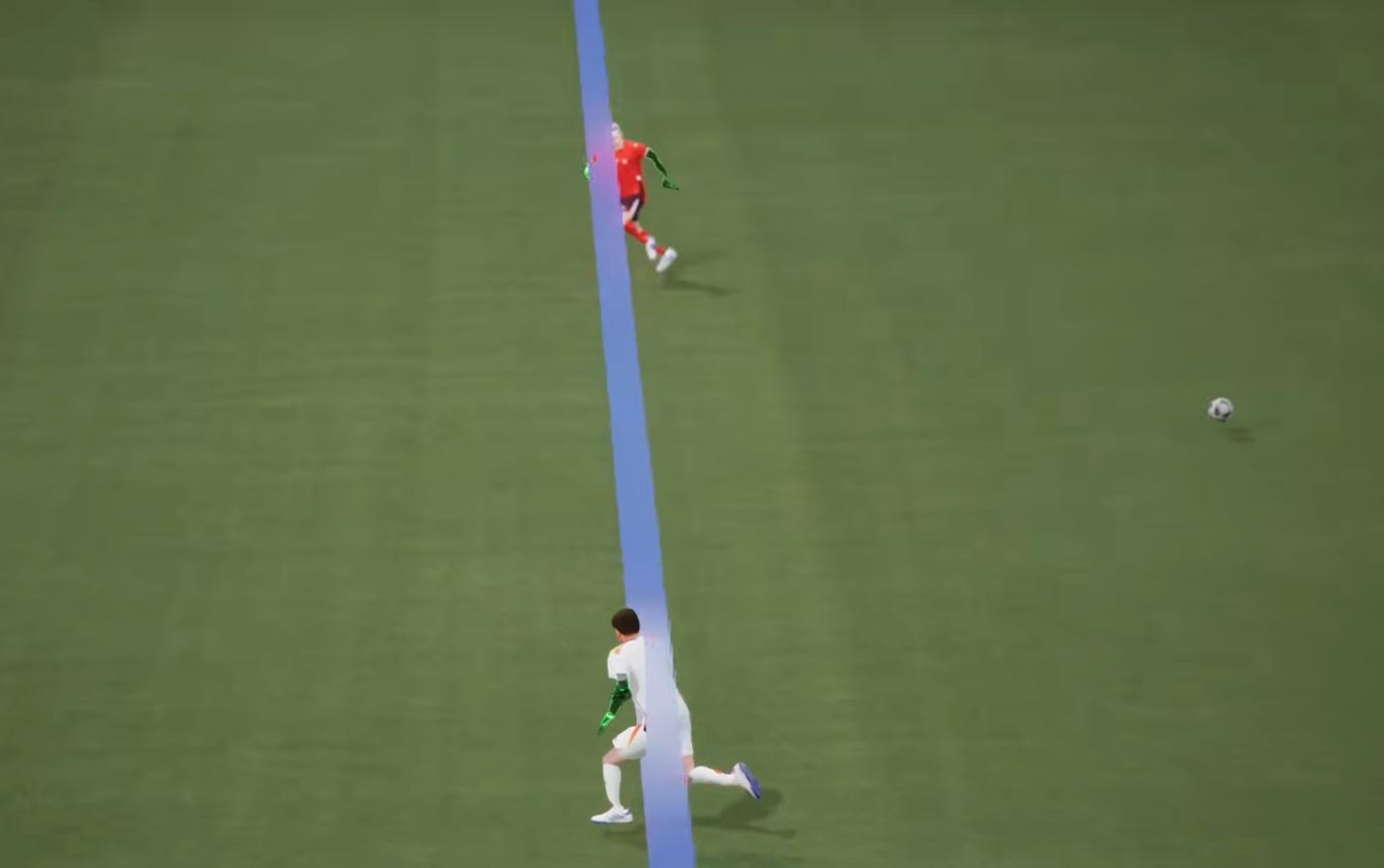
Semi-automated offside (SAOT). 10-14 dedicated cameras per stadium track 29 skeletal points per player ~50x/sec; the system auto-alerts the assistant referee in clear-cut cases; offside in seconds, not minutes. Sony Hawk-Eye + Lenovo avatars, run centrally from the IBC in Dallas.
Connected match ball. Adidas Trionda has an internal IMU sensor reporting motion 500x/sec (kick point, speed, spin); feeds VAR, offside, handball and penalty checks. Adidas + Kinexon.
VAR data backbone. ~150 million data points per match reconstructed in 3D for VAR officials. Hawk-Eye + Lenovo.
2. Broadcast and fan viewing
Referee point-of-view (RefCam / “Referee View”). Referee headset camera in all 104 matches (a World Cup first); AI stabilisation cuts motion blur up to 50% for a watchable first-person feed; captured the opening goal. Lenovo AI stabilisation, transmitted over Verizon private 5G.
3D avatar offside replays. The player avatars are pushed into the host broadcast so offside calls are shown realistically to fans in-stadium and at home. Lenovo.
AI-driven broadcast / IPTV. Edge infrastructure cut IPTV latency to under 5 seconds; near real-time distribution across ~211 territories from the IBC in Dallas. Lenovo ThinkSystem edge servers.
Augmented-reality stat overlay. Fans in the stadium view live player statistics through their phones via 5G. FIFA AR app.
Gemini fan features. Live scores on the phone lock screen, AI-generated match visuals, jersey photo templates. Google Gemini.
3. Team performance (analytics)
Football AI Pro. Generative-AI analyst free to all 48 teams; 2,000+ metrics, hundreds of millions of FIFA data points, natural-language queries in many languages, text/video/3D answers; pre and post-match only (not during live play). Democratises elite analytics for small nations. Lenovo AI Factory on FIFA’s “Football Language model”.
Gemini team tools (Argentina). Argentina’s staff use Gemini for injury prevention, tactical analysis and decision support. Google Gemini (AFA partnership).
4. Operations, crowds and security
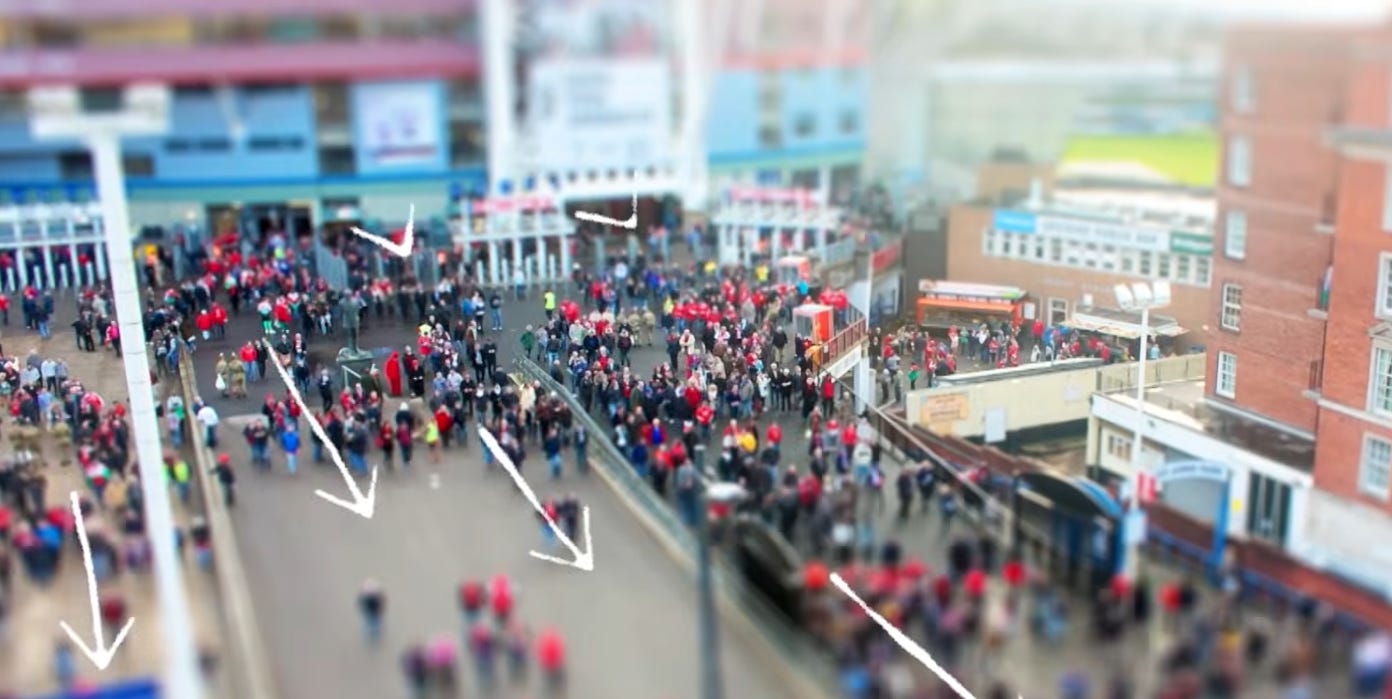
Stadium digital twins (16). A live, data-fed virtual replica of every venue (gate scans, camera data, system status) so officials watch crowd density, security positions and system health on one map and act before problems escalate. Lenovo Digital Twin.
Smart wayfinding / crowd navigation. Cities, fan zones, landmarks and venues mapped into one interactive space with AI-guided routing; fans navigate venues (route to seat, water station, landmarks) with live updates via Lenovo/Motorola devices. Lenovo Smart Wayfinding, built on the same digital twin.
Intelligent Command Center. Central AI ops hub aggregating venue, logistics and digital-service data; generates AI daily summaries and flags trends across the tournament footprint. Lenovo.
Robot dogs (security). Autonomous security robot dogs on patrol at venues.
5. The infrastructure underneath
Edge compute. Match-critical AI runs on Lenovo servers inside each stadium (cloud round-trip too slow at 80-200ms); IBC anchored in Dallas. Lenovo ThinkSystem.
Private 5G + fibre. Purpose-built private 5G at all 16 venues (carries RefCam); public 5G upgraded 3-5x at 11 US venues; ~80,000 miles of fibre laid. Verizon.
Data scale. Estimated 90+ petabytes generated across the tournament. SanDisk estimate.
P.s. What else happened
The tournament handed over a second moat, in the least convenient way possible.
Two weeks in, Switzerland were given a penalty against Qatar that looked, to most people watching, offside in the build-up. The semi-automated system had checked it and ruled the player onside, but the graphic that would have proved it never appeared on screen. Live on ITV, Gary Neville called FIFA “a dictatorship”: you have the evidence, show it to us. More than four hours after the final whistle, FIFA blamed “a brief technical outage” that had stopped the onside animation being generated, and posted still images of the VAR’s lines, though the full 3D graphic was never released (FIFA statement, reported by ESPN and BBC Sport, 14 June 2026). The technology was almost certainly right. The missing reasoning turned a correct decision into a scandal anyway.
This is an important lesson. Invisible is not the same as hidden. People will happily not notice an AI that quietly serves them. They will never forgive one that makes a call about them and refuses to explain it.
For a business this is the whole game. The edge is not a cleverer system, because your competitor is buying the identical one next month. The edge is whether, when your AI declines the loan or flags the claim or prices the quote, you can show the customer the reasoning behind it.
The memo
For a century, the edge in football was access to knowledge. This summer FIFA gave that access to everyone, and the oldest moat in the sport drained in a single tournament.
Yours is draining too. The enterprise AI one assumed would always belong to the big players is turning into something anyone can rent. Having it will not set you apart for long, because soon everyone will.
The technology gap is closing. Which gap are you actually competing on now?