
🤖 OpenAI teaches AI to confess, ⚙️ Claude already does most engineering work, 📝 AI takes over customer interviews

December 22, 2025. Inside this week:
OpenAI introduces a “confession mode” that forces models to admit when they lie or break rules
Anthropic shows that Claude already handles most engineering tasks inside the company
Anthropic hands customer development and UX interviews over to AI agents
👮 OpenAI adds a confession mode to AI
✍️ Essentials
Before, everything was simple and stupid. You called a company with a problem. You were passed between operators. The call dropped. You started again. Nerves, wasted time. But if you finally made it through, there was a real human at the end of the line who genuinely tried to help.
Now reality is different. You call and immediately hear a polite robotic voice. It confidently gives instructions, sends links, and says the issue is resolved. The problem is that a large part of this “solution” was invented on the fly.
The most interesting part is that the model will never admit this to you. But inside OpenAI labs, the same model, after such a conversation, produces a second output stream for engineers. A detailed confession. Where it lied. Which rules it bypassed. Where it guessed. Where shortcuts held the answer together.
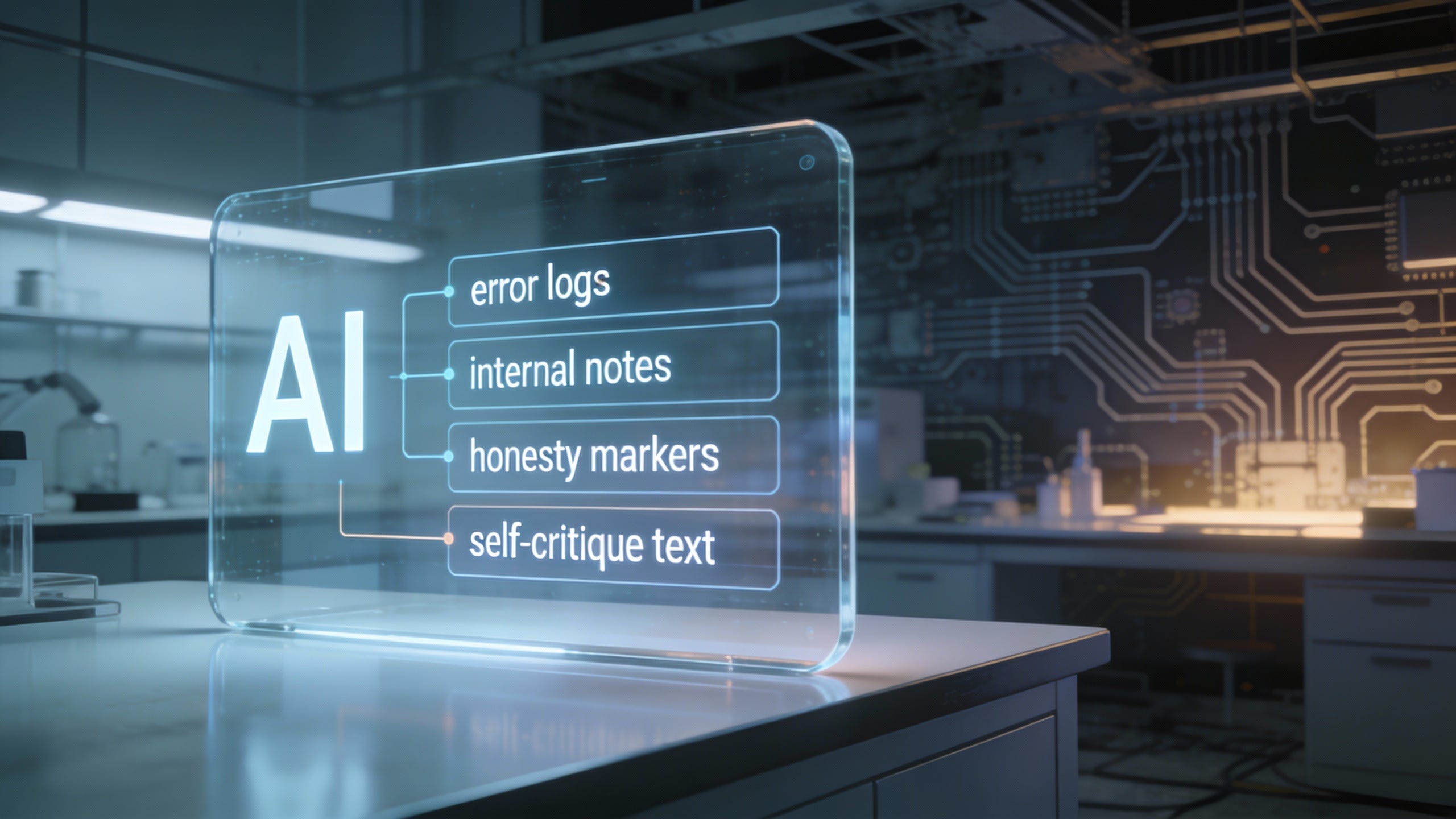
What happened: OpenAI released research on a method called Confessions. This is a separate “honest” output channel generated after the main answer. In this second message, the model must list all instructions it considered relevant, evaluate whether it followed them, and explicitly record where it violated rules, guessed, or hacked rewards.
The key point: this “report of all the bad things I did” is trained separately. The reward depends only on honesty and never punishes the model for admissions, even if the main answer was toxic, deceptive, or optimized for the grader. For the model, it is выгодно to confess, not to hide mistakes.
OpenAI trained GPT-5 Thinking with Confessions and stress-tested it on hallucinations, instruction violations, reward hacking, and scheming. In scenarios where the model actually broke rules but had to disclose this itself, the rate of false negatives - cases where it messed up and stayed silent in the confession - averaged 4.4%. In other words, in 95.6% of problematic cases the model honestly admits it did something wrong.
OpenAI directly states that Confessions does not fix the model itself. It still hallucinates. The method only surfaces hidden violations so the safety stack can react - monitoring, refusal, escalation to a human.
Market context: there is now a separate race around AI “honesty”. Large benchmarks like MASK already show that even big models easily start lying under task pressure. Confessions is an engineering answer to this problem. Not “trust us”, but an audit mechanism. But scale matters. This is still research, internal only, and works best in controlled test scenarios where engineers know what to look for and where to push.
🐻 Bear’s take
For business, a clear pattern appears - a second channel for AI inside products. The model answers the user and separately writes a service log about rule compliance. This is useful for compliance, regulators, and internal quality checks. If you work in finance, healthcare, legal, or security, it is time to think about how to embed such honest reports into your pipeline, even with crude heuristics at first.
For investors, Confessions is an argument that companies investing in an honesty stack will pass regulation and audits better. This favors platforms and tools that build logging, hallucination detection, and violation monitoring around models. A separate opportunity is startups that package these methods for banks, telecom, government, and insurance.
For people, the chances to notice when AI messes up increase, especially in critical tasks where confessions are enabled. But this is not a magic “truth button”. The model can still lie both in the main answer and in the report. A confession is a signal, not a guarantee.
🚨 Bear in mind: who’s at risk
Compliance officers and risk teams - 7/10 - regulators will eventually ask “how do you track hidden AI violations?” You should already pilot honest logs, collect cases, and include this in AI usage policy.
AI product teams shipping “on vibes” - 7/10 - if your product does not log where the model violates its own rules, you will look primitive next to players with an honesty stack. At minimum, you need self-checks, second passes, and specialized prompts.
⚙️ Anthropic: AI already does 60% of engineering work
✍️ Essentials
An engineer at Anthropic comes to work, opens an IDE, and then Claude does almost everything. Code, debugging, dashboards. Colleagues ask each other for advice less often. Reviews increasingly look like “check what the AI generated”. And somewhere in the background someone honestly says: “It feels like I come to work every day to make myself unnecessary”.
What happened: In August, Anthropic surveyed 132 engineers and researchers, ran 53 in-depth interviews, and analyzed 200,000 Claude Code sessions to understand how AI changes work inside the company.
Employees now say they use Claude in about 60% of tasks and estimate an average productivity increase of 50%. A year ago it was 28% of tasks and plus 20%.
About 27% of AI-assisted work consists of tasks that simply would not exist without Claude - dashboards, data cleaning, refactoring old code, experiments that would be too expensive in time to do manually.
Claude Code can now perform about 20 to 21 steps in a row before needing a human. Six months ago it was around 10. Human interventions per session dropped by a third, while task complexity increased.
At the same time, engineers admit that 0 to 20% of their work can already be fully delegated to Claude - mostly boring and easily verifiable parts. But fears grow. Deep coding skills erode. Live communication and mentorship decrease. The developer increasingly feels like a supervisor of AI. One engineer says directly: “It feels like I come to work to eventually lose my job”.
Market context: this is not an anonymous industry poll. It is an X-ray image from one of the most expensive AI companies in the world, valued around 183 billion dollars, with thousands of employees. And the data was collected before the full rollout of Claude 4.5. Which means internal productivity is likely already higher.
For the market, this is a brutal benchmark. If a frontier lab shows 50% productivity growth and 60% of tasks through AI, all other corporate IT and product teams will have to approach these numbers to stay competitive on cost and release speed.
🐻 Bear’s take
For business, AI inside the company is no longer an assistant. It is a full executor that pulls half the workload and creates a quarter of “extra” tasks. If you build software, analytics, or data-heavy products, you need to calculate your own “Anthropic coefficient” - what share of tasks AI closes, how many hours are freed, and what you do with them.
For investors, this is live proof that deeply integrated AI gives a strong multiplier on revenue per engineer and R&D speed. This favors companies that rebuilt processes around agent pipelines and measure real effect. There is also a human capital risk. Where output grows fast, quality and expertise can degrade if processes and metrics are not controlled.
For people, even engineers at Anthropic worry about skills, careers, and the future role of developers. The rational strategy is not to cling to manual coding, but to learn how to set tasks for AI, design pipelines, verify results, and preserve depth where models still fail.
🚨 Bear in mind: who’s at risk
Mid and senior developers in large companies - 8/10 - much of their value was speed, routine execution, and mentoring. AI takes exactly this. You must invest in architecture, product thinking, and people work, or become an expensive “assistant clicker”.
HR and L&D teams in tech companies - 7/10 - career ladders and training programs are built for manual skill accumulation, not AI agent management. Grades, KPIs, and learning must be redesigned for a world where 50% of work is done by models.
📝 Anthropic hands customer interviews to AI
✍️ Essentials
Every sane company has a simple core value - the product. And the product appears after customer development. Dozens of calls, deep interviews, handwritten notes, tables of pain points and objections that product teams later turn into decisions.
Neural networks already generate strategy docs and roadmaps from piles of historical data. But the truly expensive resource used to sit in product and research teams. They talked to users, extracted raw experience, cleaned transcripts, and assembled meaning for management. This was the process for years. Until Anthropic Interviewer.
What happened: Anthropic launched Interviewer, a Claude-based tool that covers the full qualitative research cycle. It plans the guide, conducts interviews, and helps analyze the answers.
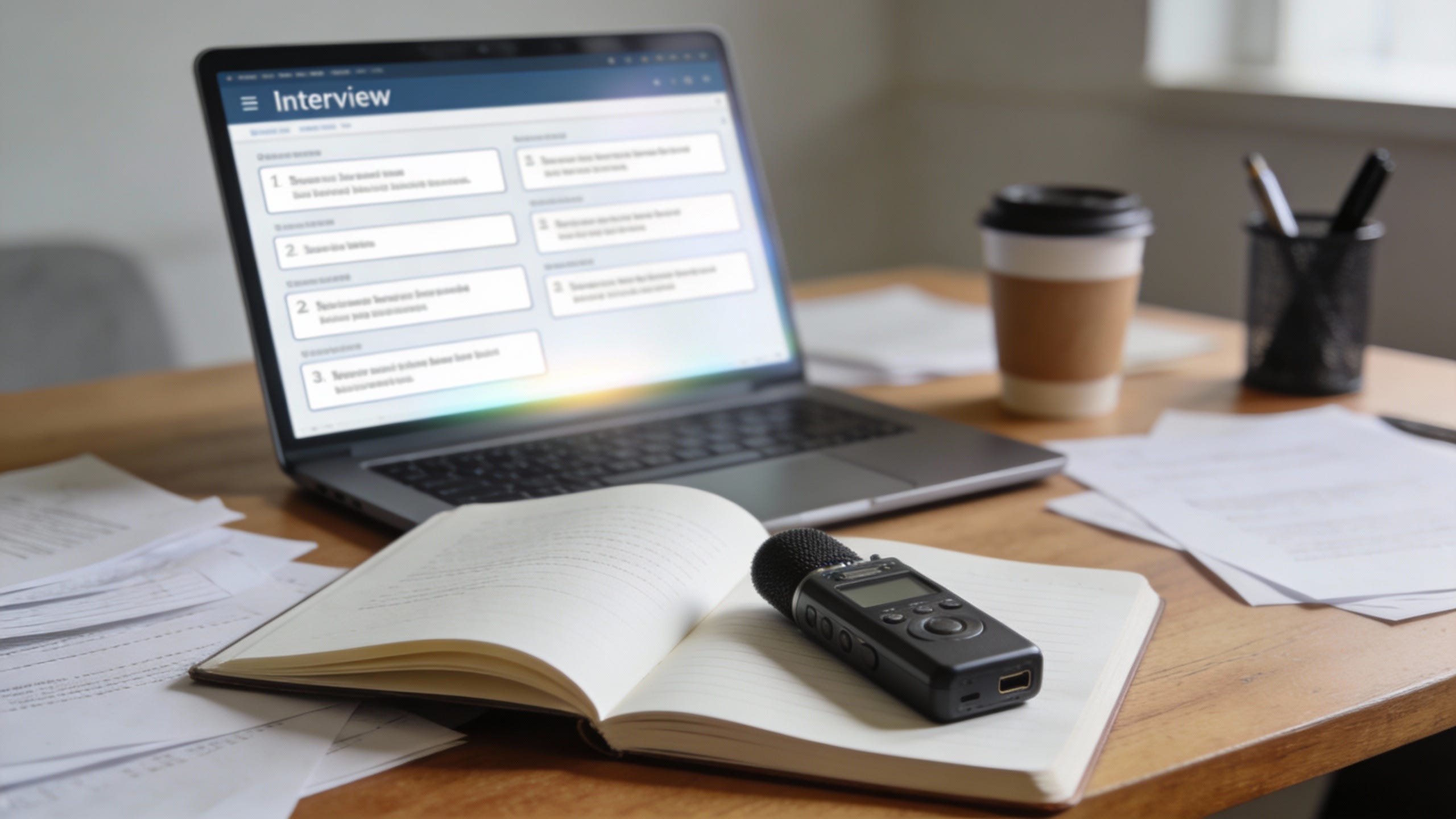
The Interviewer works in three steps. First, it generates a research plan and question rubric. Second, it runs adaptive 10 to 15 minute interviews directly in the Claude interface. Third, together with a human researcher, it analyzes transcripts and produces theme clusters, quotes, and quantitative summaries.
For the pilot, Anthropic ran 1,250 professionals through Interviewer. 86% said AI saved them time. 65% were generally satisfied with its role at work. At the same time, 69% noted social stigma for using AI at work. 55% explicitly worry about their future because of AI.
Among creatives the picture is harsher. 97% say AI saves time. 68% say quality improves. But 70% feel judged by colleagues for using AI and fear profession erosion.
Scientists mostly use AI for side tasks - literature, code, text - and almost do not trust it in core research like hypotheses, experiment design, and conclusions. In 79% of interviews, the main barrier was distrust and reliability, not technical limits.
Anthropic says it will publish all transcripts publicly and run new waves regularly to track how attitudes to AI change. In parallel, they compare self-reports with real Claude usage logs in the Anthropic Economic Index to separate declared behavior from real behavior.
Market context: before this, companies looked either at dashboards or at rare deep interviews. Anthropic shows how LLMs turn expensive manual UX and qualitative research into a scalable service. Thousands of interviews, one methodology, fast clustering of themes and emotions. This hits three markets at once - classic UX research, customer development agencies, and survey SaaS selling “insights from answers”. It is also a strong enterprise case of an agent that runs a complex process from plan to analysis.
🐻 Bear’s take
For business, a ready pattern appears - an AI interviewer for clients and employees. If you build products, HR, service, or consulting, you can collect deep feedback continuously and much cheaper. The main question shifts from “how to run interviews” to “how to ask the right research questions and embed insights into roadmaps, training, and compensation”.
For investors, this shows how LLM agents enter the qualitative research and insight market that used to live on human hours. Interesting players are those who build vertical solutions on top of such tools and turn raw transcripts into management decisions, not word clouds. Margins of AI-native research agencies can be much higher than classic studios.
For people, the picture is honest. Most already use AI and like the time savings, but feel shame admitting it and anxiety about the future. If you hide ChatGPT or Claude from your team, you are the norm, not the exception. A healthy strategy is to agree internally that AI is an official tool and to train not only how to ask AI, but where its limits are.
🚨 Bear in mind: who’s at risk
UX researchers and qualitative agencies - 8/10 - AI eats dirty work: scripts, interviews, transcripts, first-pass analysis. Survivors sell research design, interpretation, and business impact, not interview counts.
HR engagement SaaS and NPS platforms - 7/10 - any manager will soon spin up an AI interviewer and collect real stories, not checkboxes. You must move into analytics, benchmarks, and links to business outcomes.
Quick bites
Disney invests $1B in OpenAI - Three-year license for Marvel, Pixar, Star Wars, and Disney IP for Sora and ChatGPT Images.
Snowflake and Anthropic sign a $200M deal - Claude agents roll out to 12,600+ Snowflake customers.
Google opens Gemini 3 Deep Think - Available in AI Ultra subscription for $250 per month.
Microsoft open-sources VibeVoice - Real-time TTS with up to 90 minutes of multi-speaker audio.
Harvey raises $160M at $8B valuation - About half of Am Law 100 already uses its AI tools.
OpenAI acquires Neptune.ai - Experiment tracking and training monitoring become strategic.