
😎 OpenAi published Enterprise usage of Ai, 👓Google Glass returns, 💬 Claude Code moves into Slack

December 19, 2025. Inside this week:
Google officially brings smart glasses back and fixes old mistakes
Claude Code enters Slack and turns threads into dev pipelines
OpenAI publishes hard numbers on enterprise AI usage
👓 Google Glass returns
✍️ Essentials
Remember that moment when Sergey Brin, dressed like Steve Jobs, walked on stage and showed the first Google Glass. “The iPhone killer”. And then something went wrong. It looked like broken glasses on the face of a tech nerd. That was Google I/O, June 27, 2012. 13 years passed.
And as Britney once sang - oops, Google did it again. This is already the second comeback this week. On Tuesday it was DeepSeek. Now it is Glass.
Google officially says AI glasses will launch in 2026. Not alone, but together with Samsung, Warby Parker, and Gentle Monster. After watching the Vision Pro horrors and how stylishly Zuck drove out with Ray-Ban and later Oakley, Google decided it can repeat.
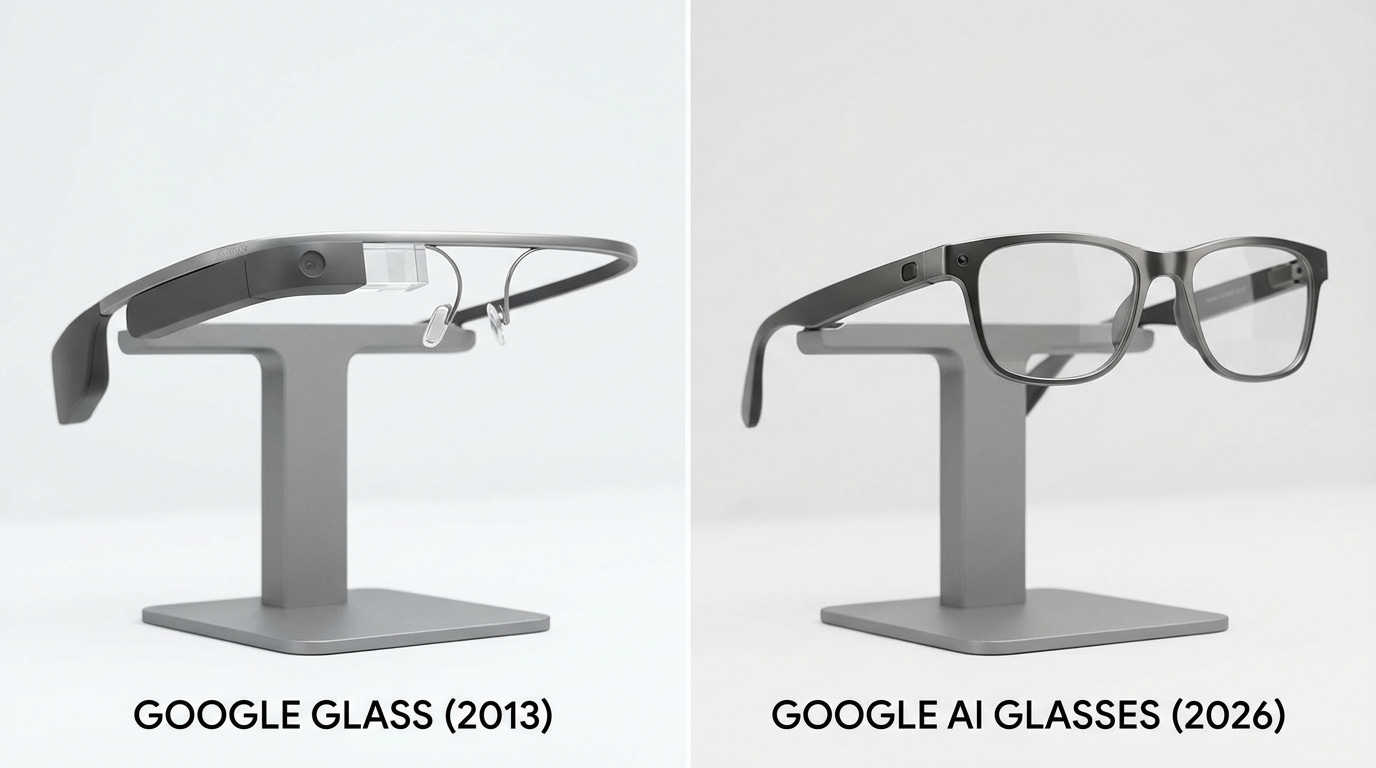
Facts from Google:
There will be two formats.
First - “no screen” glasses with speakers, microphones, and camera, designed for talking to Gemini, taking photos, and receiving voice hints.
Second - “display in the lens” glasses with private visual prompts directly in the field of view - navigation, translation subtitles.
Public timing is fixed - 2026.
Warby Parker is not just “let’s talk”. Google commits up to $150M, including equity investment, into intelligent eyewear.
Hardware focus is “lightweight and all-day”, with most compute moved to the smartphone.
The previous consumer Glass was shut down around 2015. Google is returning to a field where Meta already has a strong position.
🐻 Bear’s take
For business - prepare “camera plus voice” scenarios for Android XR. Field support in the line of sight, navigation, translation, employee training, retail assistants. Otherwise the interface moves into glasses and you stay inside the phone.
For investors - if Google pushes Android XR into eyewear, money will flow into the ecosystem. Software, integrations, security, enterprise rollouts. Not just hardware. Meta loses monopoly on “smart glasses as an accessory”.
For people - translation and navigation become background features without pulling out the phone. At the same time, another layer of cameras appears around us, and society will have to get used to this faster than it wants.
🚨 Bear in mind: who’s at risk
Meta smart glasses - 7/10 - Google arrives with Android ecosystem, fashion partners, and its own AI. What to do - accelerate the lineup, close more use cases, hold price and distribution.
Mid-size eyewear and smart accessory brands - 8/10 - Google and Meta marketing and channels will crush them. What to do - move into niches like sport, medicine, industry, or become OEMs and sell components and software layers.
💬 Claude Code moves into Slack
✍️ Essentials
Imagine this. A message lands in #prod-bugs: “customer gets 500 on payment”. Then 40 messages follow. Log fragments. “Which repo is this?”. “Who touched billing?”. By the book you open Slack, then GitHub, then IDE, then five more tabs. And you already hate everyone.
Anthropic released a beta integration of Claude Code with Slack that turns threads into an automated dev process. This is a research preview release dated December 8, 2025.
How it works:
You write in Slack and tag @Claude. It spins up a full Claude Code session and pulls context directly from the thread or recent channel messages - bug reports, features, discussions.
Then the “no manual copy-paste” magic starts. Claude selects the needed repository from those you already granted access to in Claude Code.
It posts status updates back into the same Slack thread.
At the end you get buttons and links - view session, send changes to review, create a PR. All without leaving Slack.
Important detail - this is not a new app. It is an extension of the existing Claude Slack app, which used to be mostly a helper chat and now becomes an entry point into agent coding.
Market context - models are now strong everywhere. The next battle is for the “real workplace”. Slack is where engineering context lives and where decisions are made.
🐻 Bear’s take
For business - if you have a product team, you can build a “bug in Slack - fix - PR” flow and measure economics by response time and time to merge. But access policies to repos and secrets must be thought through early.
For investors - value moves into workflow integrations and access control. Logging, approvals, guardrails. Not “another chatbot”. A whole layer of enterprise wrappers around agent coding appears.
For people - fewer context switches and routine. More chances that small bugs get closed fast. Downside - higher risk of auto-commits and “silent” changes if review processes are weak.
🚨 Bear in mind: who’s at risk
Team leads and DevOps - 8/10 - Slack becomes the entry point for code changes. Access rights, secrets, and reviews must be ironclad. What to do - mandatory approvals, limited tokens, separate service accounts, audit logs.
Junior engineers on task-level work - 7/10 - part of “fix from the thread” tasks moves to the agent. What to do - take ownership of modules, testing, complex debugging, and release quality.
🏢 OpenAI publishes its enterprise report
✍️ Essentials
Imagine a Tuesday morning. Regular 10:00 call. You get three “urgent” tasks. Clear client email. Draft a presentation plan. Check why the report numbers are off again. You open ChatGPT, throw in emails, drafts, and a table. By 12:30 you have a client reply, slide structure, list of data fixes, and wording options for your boss so he does not start a public execution. At 13:00 you go to lunch without guilt for the first time in a year.
And then comes the uncomfortable part. Not everyone works like this. In the same company someone “implemented AI” because once they asked “summarize this thread”. Same KPIs. Same market. Very different speeds.
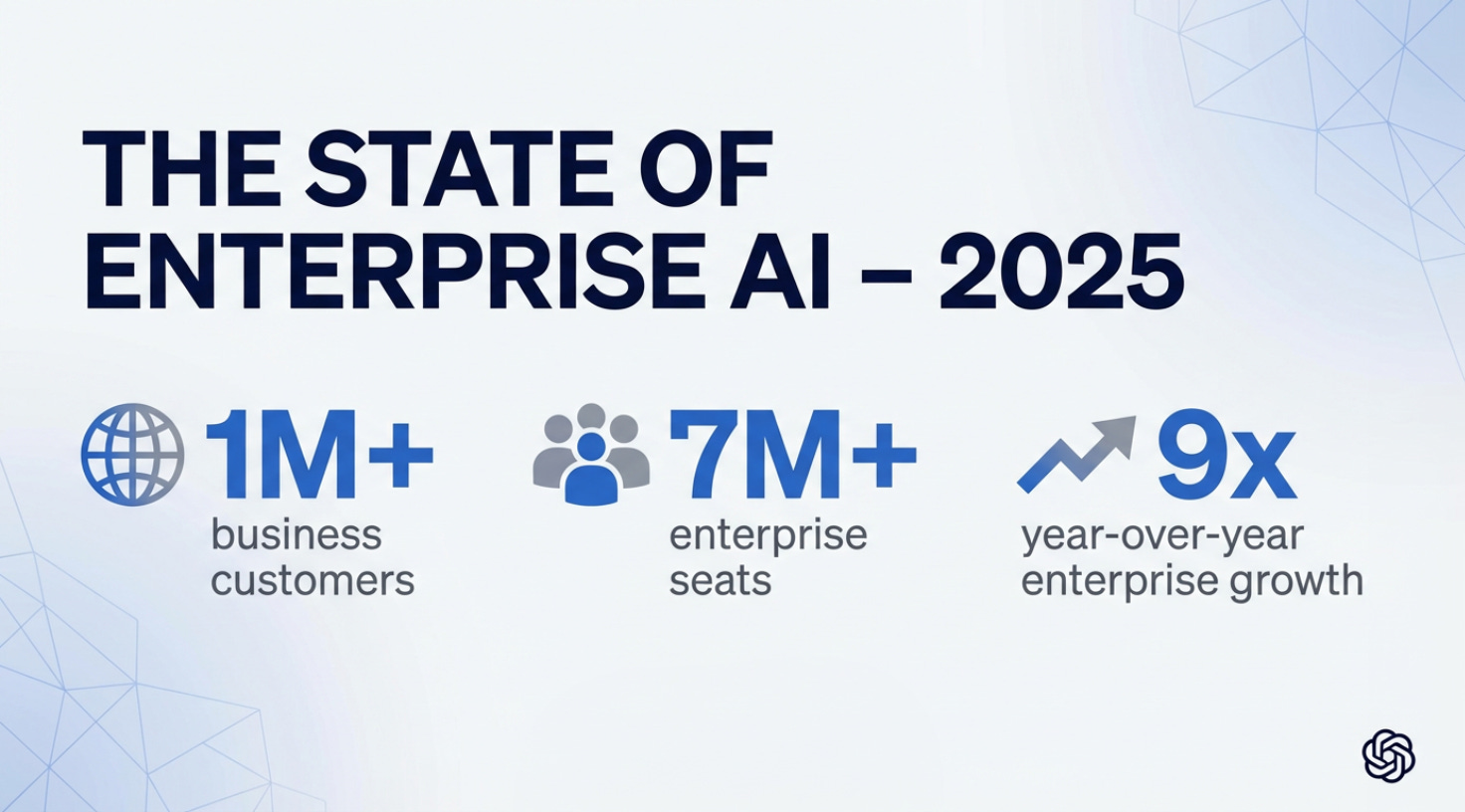
OpenAI released its first report “The State of Enterprise AI 2025”. Numbers:
More than 1 million business customers.
More than 7 million workplace seats.
Enterprise seats grew about 9x year over year.
Sources - de-identified usage data plus a survey of 9,000 employees from nearly 100 companies.
75% of workers say AI improved speed or quality.
On average ChatGPT Enterprise saves 40 to 60 minutes on an active day. For data science, engineering, and comms - 60 to 80 minutes.
75% say they now do tasks they previously could not.
The gap between top users and the median is already visible in numbers. Top 5% send 6x more messages. In coding, the gap is 17x.
Those who use AI broadly across about 7 task types save 5x more time than those who use it for 4.
Weekly enterprise messages grew about 8x since November 2024. Reasoning token consumption per organization grew 320x year over year.
Market context - the main effect is not “we adopted AI”, but “we created a layer of power users who pull for three”. If companies do not scale this, they get internal productivity gaps, not overall efficiency growth.
🐻 Bear’s take
For business - the target is not “access granted”. The target is reducing the gap. Role-based training, prompt templates, quality control, and metrics on depth of use. Otherwise only 5% of fans get the benefit.
For investors - value moves into the enterprise layer. Governance, security, audit, workflow integrations. Growth is already measured in hours per week and multiples at the top.
For people - if you do not become a power user, you will be overtaken by those who do. Minimum plan - master 5 to 7 scenarios: analysis, writing, summarization, search, coding, automation, agents.
🚨 Bear in mind: who’s at risk
Companies that bought licenses but built no playbook - 8/10 - top performers fly ahead, the median stays. What to do - treat AI rollout as a product with an owner, metrics, and continuous improvement.
Middle managers who “manage by status” - 7/10 - part of management turns into process and quality setup. What to do - own workflows and standards, not meeting counts.
Quick bites
Trump allows Nvidia to sell H200 to China - US takes 25% of revenue. Export control turns into a geopolitical tax.
IBM buys Confluent for $11B - real-time data becomes default fuel for enterprise agents.
Meta acquires Limitless - always-on recording wearables bring privacy chaos.
NYT and Chicago Tribune sue Perplexity - scraping era ends, licenses or courts ahead.
OpenAI and Instacart launch Instant Checkout - chat becomes the cash register.
OpenAI disables shopping suggestions - trust breaks faster than monetization.
Meta signs news licenses - fresh content becomes paid fuel for chatbots.
Essential AI opens Rnj-1 (8B) - small models become serious code agents.
Google denies ads in Gemini - monetization pressure grows, product stays clean for now.
DOE launches AMP2 - autonomous microbe research infrastructure goes live.