
🎅 Coca-Cola makes AI Christmas again, 🚀 Google plans orbital data centers, 🛒 Perplexity goes to war with Amazon

November 7, 2025. Inside this week:
Coca-Cola creates its Christmas ad entirely with AI - in 30 days, with 5 people
Google plans to move data centers into orbit
Perplexity accuses Amazon of AI bullying
Plus: Apple’s new Siri runs on Gemini, OpenAI’s private buyback, Microsoft and Lambda’s mega-cloud, and Japan vs Sora
🎅 Coca-Cola makes AI Christmas again
✍️ Essentials
For Coca-Cola, Christmas is not just a holiday - it is a sacred marketing ritual.
Back in the 1930s, the company dressed Santa Claus in a red suit to match its brand colors, forever embedding him in global advertising culture.
They cannot afford to fail - half the planet waits for their annual Christmas ad as part of the season itself.
In 2025, they did it again - but this time, completely with AI.
The new “Holidays Are Coming” ad was created using generative technology only - and for the first time, there were no people on screen, only animals.
The creative partners were AI studios Silverside and Secret Level.
The entire shoot was composed of 70,000 AI-generated clips, assembled by a team of just five people.
The production cycle took 30 days, compared to the traditional 12 months of work on past campaigns.
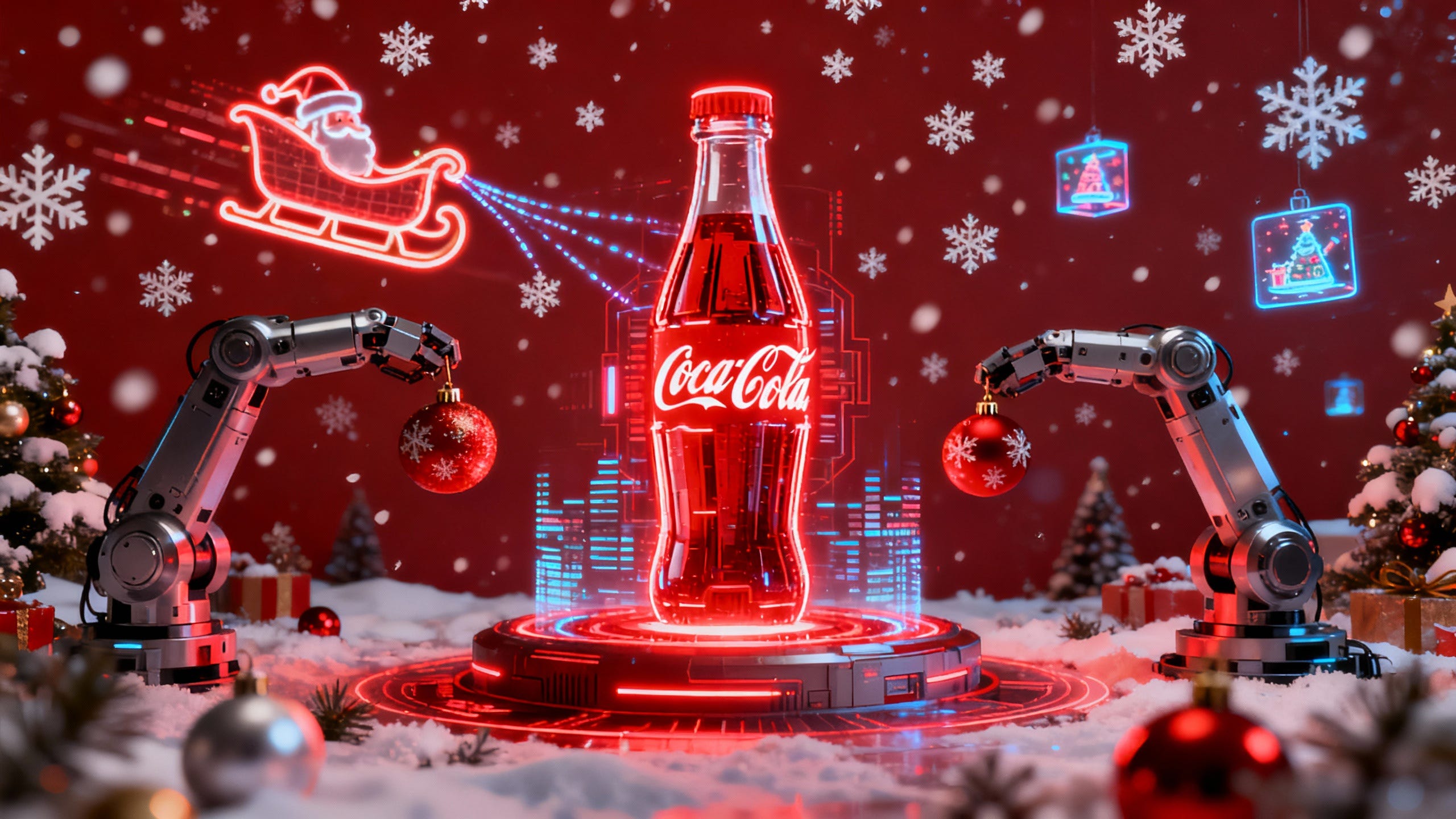
A year earlier, Coca-Cola’s first AI-driven Christmas experiment had backfired.
Viewers complained about uncanny faces and plastic skin, and artists accused the company of “erasing humanity.”
But this year, Coca-Cola did not step back.
Its VP of Global Marketing, Pratik Thakar, said bluntly: “The genie is out of the bottle.”
AI, he added, is now at the center of Coca-Cola’s entire marketing transformation.
And this time, the results are different.
With current AI video quality, this might be the last Christmas where people can still tell that the ad was made with artificial intelligence.
Next year, it may no longer matter.
🐻 Bear’s Take
For business: 30 days instead of 12 months and a five-person crew instead of hundreds - that’s the new rhythm of branding.
Coca-Cola has shown that a global seasonal campaign can now be made 10–12× faster and cheaper.
For investors: creative budgets across the FMCG sector could shrink by billions.
Advertising agencies with long production cycles are at risk, while brand profitability may rise sharply due to cost savings.
For people: visual perfection is about to become fully synthetic.
The difference between “real” and “generated” will soon vanish - and with it, the human touch.
🚨 Bear In Mind: Who’s At Risk
Advertising industry - 9/10 - If five people can make Coca-Cola’s Christmas ad in a month, thousands of agencies worldwide are in danger. Shift from execution to concept and strategy, or fade out.
Artists and production studios - 8/10 - AI generation already replaces months of filming. Learn the tools fast, or be replaced by prompt directors and data designers.
🚀 Google plans to move data centers into space
✍️ Essentials
Last week, BiPiAi mentioned a startup called Starcloud that wanted to place AI data centers in orbit.
Many readers laughed at the idea: “How do you cool them?” “How do you transmit data fast enough?”
Now Google has stepped in - and suddenly, the idea doesn’t sound so crazy.
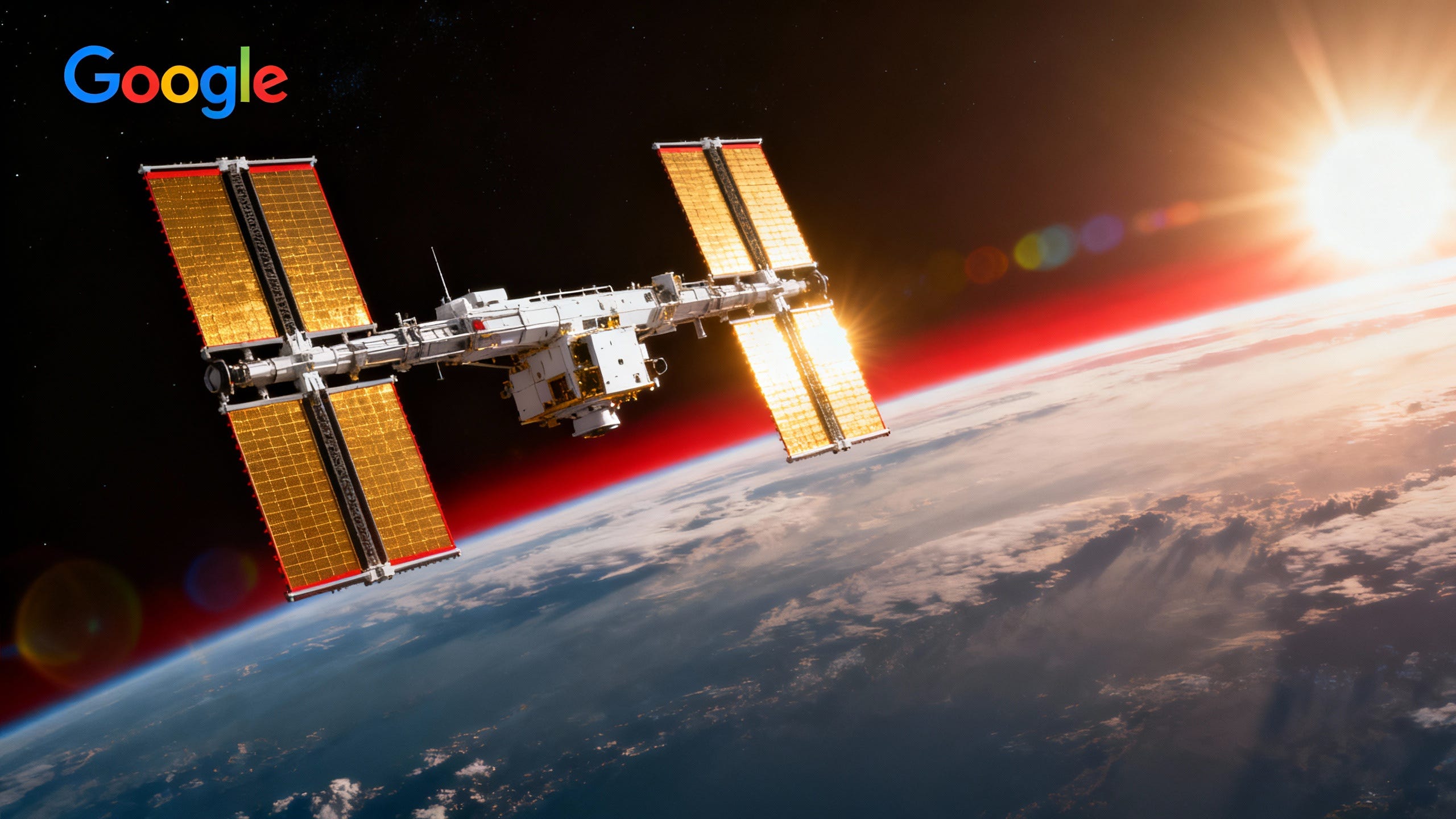
The company has revealed Project Suncatcher - a plan to deploy orbital AI clusters powered by sunlight.
Each cluster will consist of satellites with built-in TPU chips and large solar arrays operating on a dawn-dusk orbit.
In that position, panels receive near-constant light, generating up to eight times more energy than on Earth.
The first two prototypes, built with Planet Labs, are scheduled for launch in 2027.
Cooling?
Through passive radiators that dissipate heat directly into space.
Google admits it’s the biggest technical challenge but claims early thermal models show stable chip temperatures without fans or liquid cooling.
Data transmission?
For AI clusters, bandwidth must reach tens of terabits per second.
Google plans to link satellites using laser-based optical channels over distances of a few hundred meters.
In lab tests, they’ve already achieved 1.6 Tbps in both directions, aiming for 10 Tbps per link in orbit.
Scale?
A full orbital cluster could include 81 satellites arranged in a 1-kilometer formation.
If launch costs fall below $200 per kilogram by the early 2030s, orbital compute could become economically comparable to Earth-based data centers.
🐻 Bear’s Take
For business: Google is creating a new category - orbital compute.
Unlimited sunlight, high throughput, no land permits, no local energy caps.
If the 2027 prototype succeeds, companies may start renting GPU capacity in orbit within five years.
For investors: high risk, but if thermal stability and data links work, costs per watt drop and margins rise.
Capex equals launch plus optics, Opex almost zero. This could spark a new infrastructure boom.
For society: compute power will grow, network strain will shrink, and model latency may drop sharply.
🚨 Bear In Mind: Who’s At Risk
Governance and control - 9/10 - If AI operates in orbit, powered by the sun and beyond jurisdiction, it cannot be shut down. No plug means no switch. A kill-switch must be designed at the protocol level.
Engineering risk - 7/10 - Cooling or communication failure could destroy billions in R&D. But if it works, AI will literally move beyond Earth.
🛒 Perplexity goes to war with Amazon
✍️ Essentials
You know what’s more addictive than scrolling TikTok? Scrolling Amazon.
Its algorithms drain your wallet - you buy things you didn’t plan to, and you’re too lazy to return them.
Now AI agents want to break that cycle.
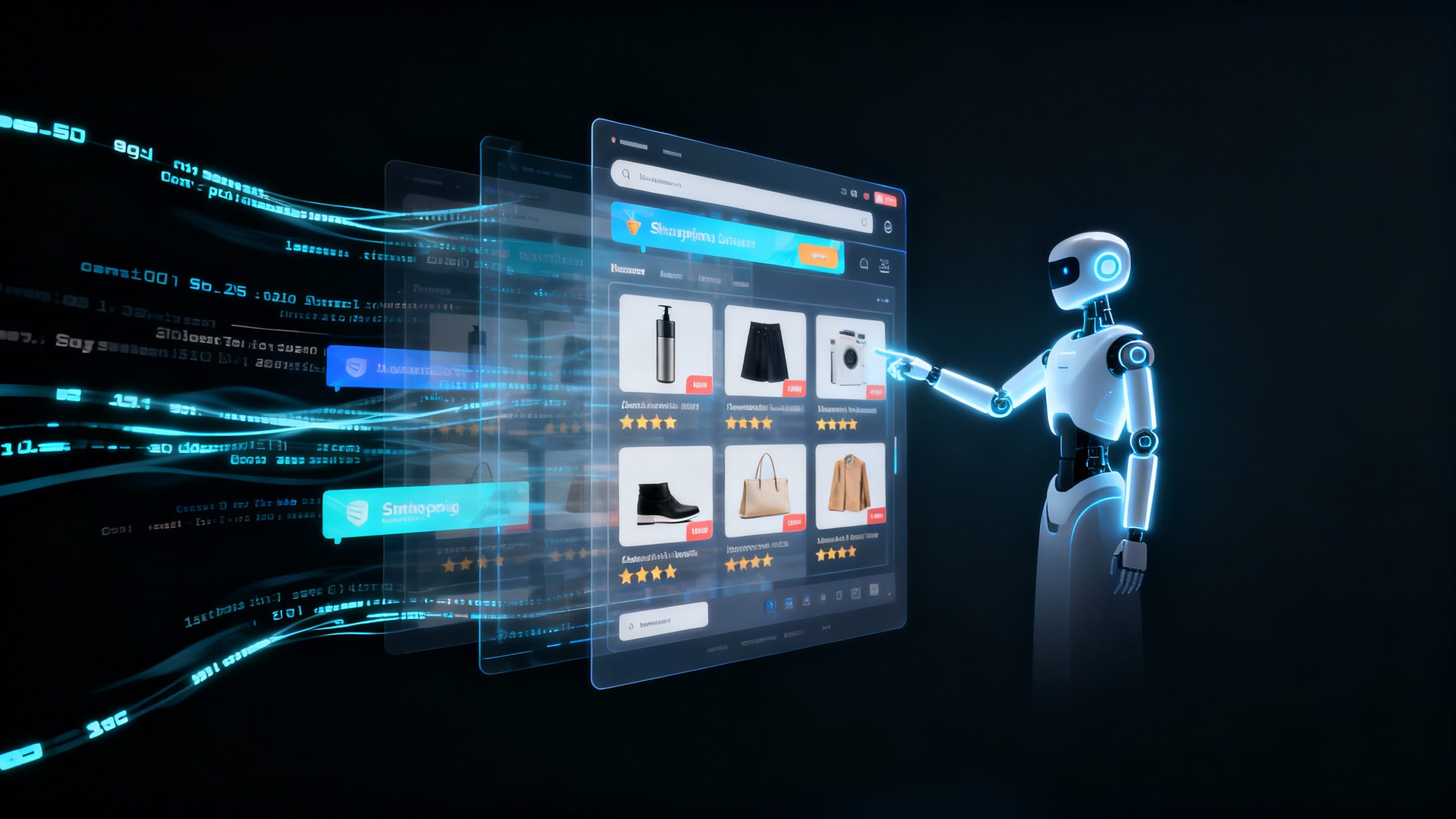
Perplexity AI has publicly accused Amazon of “bullying.”
The company received a cease-and-desist letter demanding it block its Comet AI browser from making purchases on Amazon’s site.
Amazon’s reasoning: “It ruins the customer experience.”
Perplexity’s response: “No, it ruins your control.”
Context:
Amazon has already blocked crawlers from OpenAI, Google, and Meta, while developing its own shopping agents - Rufus and Buy For Me.
The pattern is clear: close access for everyone else, protect your own ecosystem.
Amazon claims it’s about “user safety,” but in reality, it’s about protecting its $47 billion annual ad business.
If AI agents gain the ability to compare, filter, and buy autonomously, Amazon’s recommendation model collapses.
An algorithmic buyer meeting an algorithmic seller - someone will lose the margin game.
🐻 Bear’s Take
For business: the age of product “windows” is ending.
If agents buy directly through APIs, marketing influence disappears.
Retail platforms will have to rebuild UX for autonomous agents or lose transactions.
For investors: ad-based monetization is at risk.
If agents bypass sponsored listings, e-commerce valuations could drop by double digits.
For people: it’s a chance to stop buying out of impulse.
AI could finally separate need from manipulation.
🚨 Bear In Mind: Who’s At Risk
Marketplaces - 8/10 - Algorithm wars are coming. If AI filters out manipulative listings, the “recommendation → impulse purchase” loop dies. Open APIs or lose relevance.
Users - 6/10 - If big platforms start blocking agents, grey markets will rise - proxy tools, scrapers, unregulated buying bots. Convenience increases, but so does data risk.
Quick Bites
Apple admits new Siri runs on Google Gemini - Cupertino quietly confirms cross-dependency inside Big Tech.
Sam Altman offers to buy out unhappy OpenAI investors - Internal liquidity without IPO shows rare founder confidence.
Microsoft signs multi-billion deal with Lambda - Builds new Azure-scale AI infrastructure on Nvidia GB300 chips.
Anthropic signs Cognizant - 350,000 employees onboard; Claude becomes corporate AI standard.
Japan vs OpenAI - Ghibli and Bandai Namco demand Sora stop training on their content.
Microsoft invests $15.2B in UAE data centers - 80,000 Nvidia GPUs to power the Gulf’s AI ambitions.
Shopify reports 11× sales boost from AI search - Machine recommendations now drive the majority of purchases.
Cognition launches Codemaps - Real-time visual mapping of codebases reduces developer onboarding time.
OpenAI releases Sora for Android - Generative video comes to 7 countries in Asia and North America.
OpenAI launches IndQA - India-specific knowledge benchmark; GPT-5-Thinking tops the leaderboard.
Anthropic partners with Iceland - Pilot AI education program with hundreds of teachers using Claude.