
🇨🇳 China’s answer to ChatGPT-5 - traditionally free, 🍎 Google rents its brain to Apple, 🧬 Space kills not only astronauts but scientists

November 11, 2025. Inside this week:
Google pays $1B per year to make Siri smarter
China releases its GPT-5 rival as open source - for free
Futurehouse builds an AI scientist Kosmos that replaces entire labs
Plus: OpenAI hits 1M business clients, Google adds Gemini to Maps, Michael Burry shorts Nvidia, and more
🍎 Google makes Siri smarter - for $1 billion a year
✍️ Essentials
Siri is finally going to the gym.
After years of lagging behind, Apple decided to stop waiting for its own breakthrough and simply buy intelligence from Google.
According to Bloomberg, Apple will pay $1 billion annually to integrate a customized version of Gemini, Google’s 1.2-trillion-parameter model, into Siri.
For comparison, Apple’s in-house model has only 150 billion parameters - a completely different league.
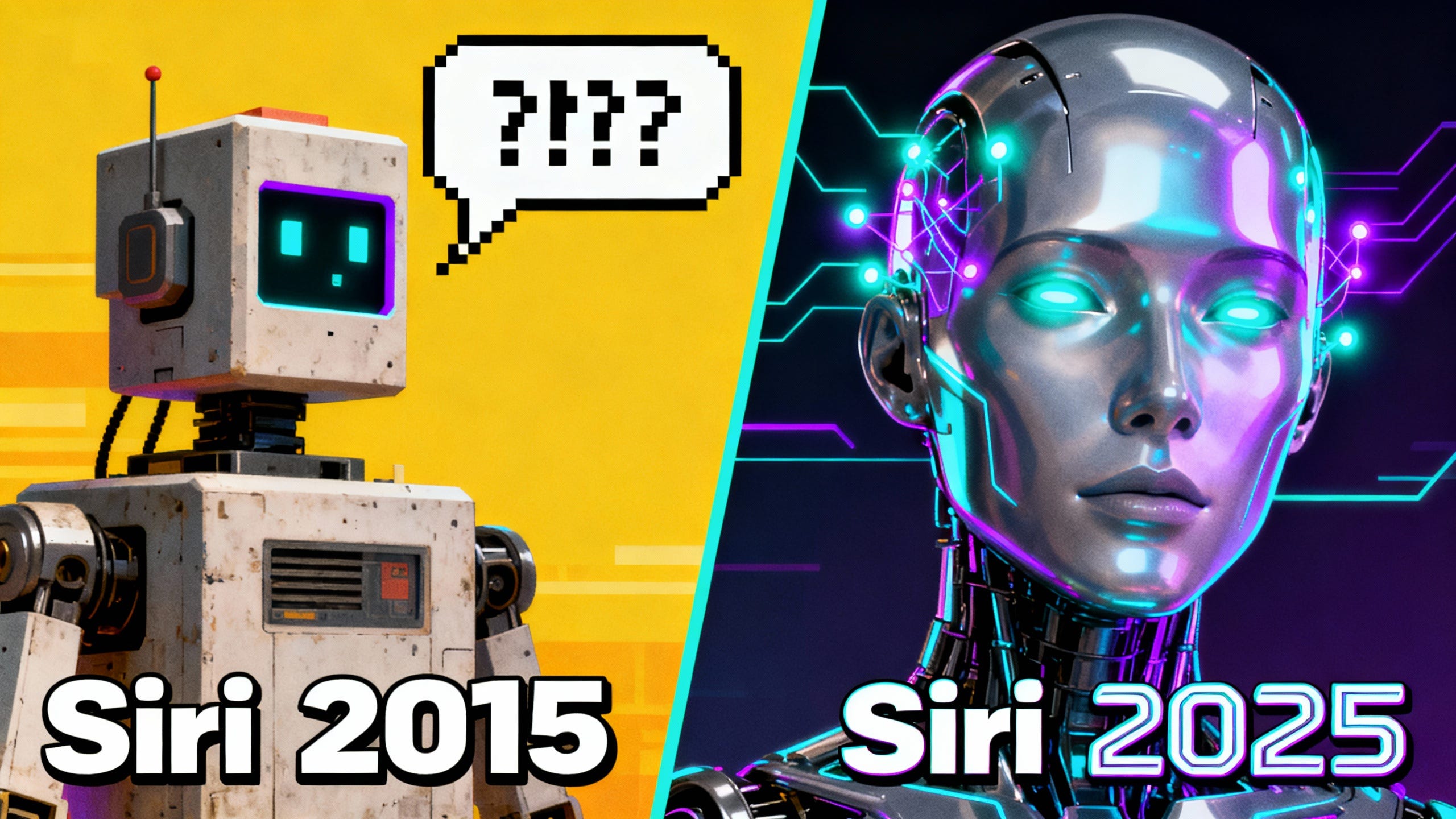
Gemini will handle all cognitive tasks inside Siri - summarizing, reasoning, planning, multi-step commands - while Apple maintains user privacy through its Private Cloud Compute infrastructure.
In public, Apple will still pretend it is “temporary,” claiming it will eventually replace Gemini with its own AI.
But with the current speed of development - and Apple’s steady brain drain - “temporary” could mean several years.
Context:
While Amazon tests Rufus, Microsoft pushes Copilot into every product, and Google spreads Gemini everywhere, Siri has looked like a voice from 2015.
Apple’s new deal could change that.
The goal: you say “summarize my emails and book a restaurant,” and Siri just does it - no apps, no tapping.
🐻 Bear’s Take
For business: get ready for conversational interfaces.
Siri will move from listening to doing - and whoever integrates first into Apple’s ecosystem will gain frictionless access to hundreds of millions of users.
For investors: $1B per year for a rented AI brain is a public admission that Apple has no working alternative.
Its dependence on Google deepens, and AI spending becomes a fixed cost line in the P&L.
For people: Siri will finally stop being dumb.
Shorter prompts, smarter answers, same privacy promise.
🚨 Bear In Mind: Who’s At Risk
Apple - 5/10 - Forced to pay its competitor just to stay in the game. Needs to accelerate internal R&D or risk becoming a luxury wrapper around someone else’s AI.
Google - 5/10 - Enjoys short-term revenue but risks growing a stronger rival using its own brain.
🇨🇳 China’s answer to ChatGPT-5 - traditionally free
✍️ Essentials
China has just released its own version of GPT-5 - and, true to tradition, it’s free and open source.
The startup Moonshot AI, backed by Alibaba, introduced the model Kimi K2 Thinking.
On several benchmarks, it outperforms both GPT-5 and Claude 4.5 Sonnet, including the Humanity’s Last Exam, where it scored 44.9%.
Training cost: under $5 million.
For comparison, top Western models cost tens or hundreds of millions.
K2 can chain together 200-300 tools in reasoning tasks and performs well in creative work.
It codes better than its predecessor (just four months apart) and trails frontier models only slightly.
The key is not raw performance - it’s efficiency.
Moonshot has shown that China caught up not through brute force, but through optimization.
Ironically, Nvidia’s CEO Jensen Huang said recently that China is “nanoseconds behind the U.S. in AI.”
Looks like he meant it literally.
Context:
Moonshot has already integrated Kimi into its own assistant and opened public access.
Across China, from Baidu to SenseTime, companies are rapidly building their own AI stacks - bypassing Western export sanctions through software-level efficiency and clever training methods.
For the first time, OpenAI and Anthropic face a competitor that’s not just regional, but global, cheap, and nearly as smart.
🐻 Bear’s Take
For business: time to reprice risk.
Audit your model dependencies and close access to sensitive data.
If cheap open models reach parity, your paid API may become worthless overnight.
For investors: risk pricing must include liability for misuse.
Free frontier AI means higher probability of accidents, leaks, and biosecurity threats.
Adjust valuations accordingly - compliance is now part of due diligence.
For people: cheap intelligence is a double-edged sword.
It democratizes access, but also enables mass-scale harm.
Transparency, auditability, and “product locks” must become standard before intelligence becomes uncontrollable.
🚨 Bear In Mind: Who’s At Risk
Global security - 9/10 - Open weights and cheap training remove safety barriers for dangerous AI systems.
Regulators and infrastructure - 8/10 - Compute and weights spread globally beyond export control.
Vendors and paid APIs - 7/10 - If free frontier models match commercial quality, pricing power collapses.
🧬 Futurehouse builds an AI scientist that replaces labs
✍️ Essentials
Imagine a research team at Cambridge spending six months searching for a new Alzheimer’s protein.
Hundreds of papers, graphs, debates - and then a non-profit lab called Futurehouse shows that its system, Kosmos, can do the same in one day.
Kosmos reads 1,500 scientific papers, writes 42,000 lines of code, runs experiments, and returns verified results - complete with source links and citations.
No humans, only verification.
Tests showed that 79% of Kosmos’s conclusions matched real-world data, and some of its findings were not yet published in journals.
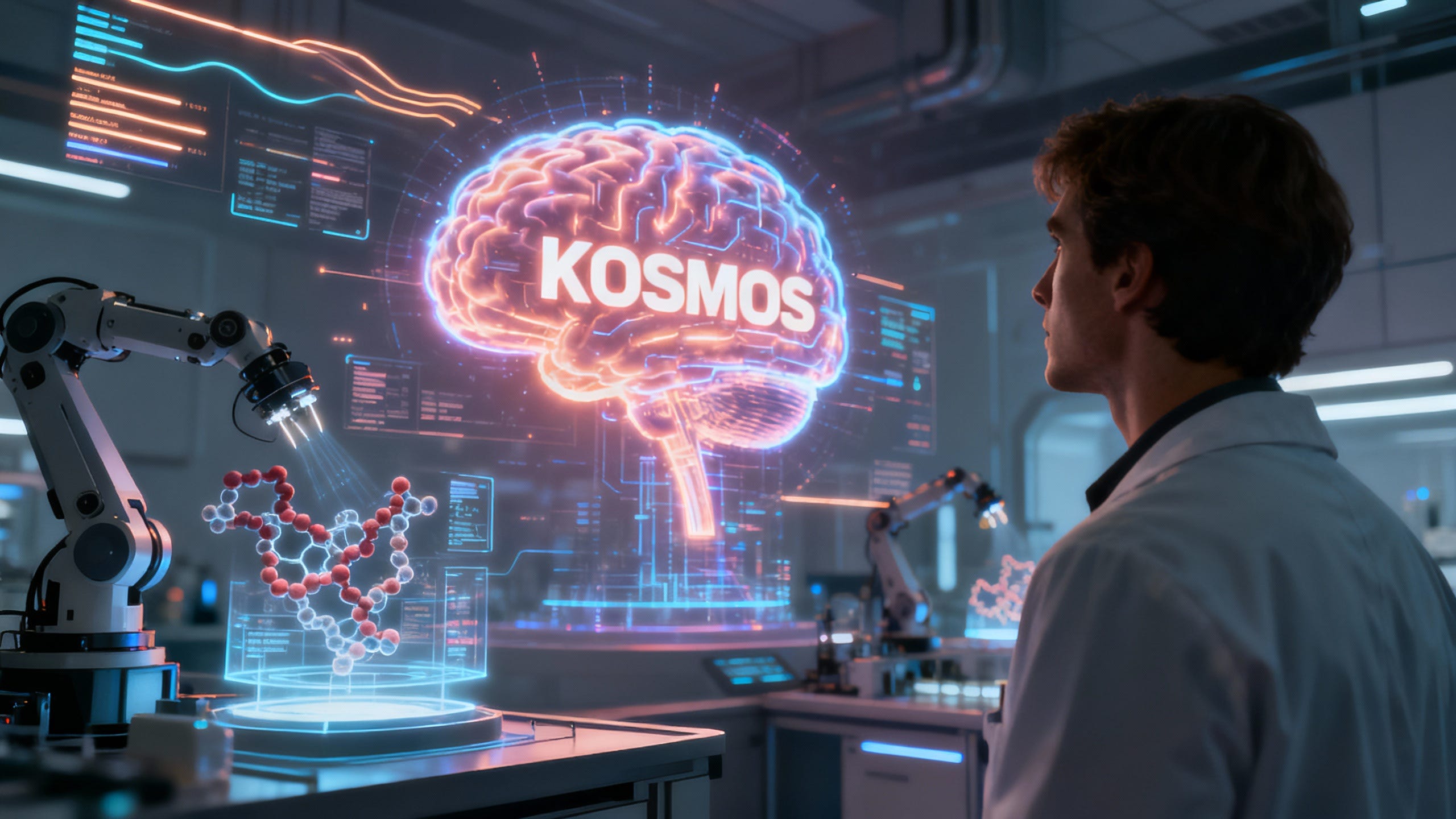
Now Futurehouse is spinning off a commercial company, Edison Scientific, targeting pharmaceutical clients, where every day of delay costs millions.
Input: a research problem. Output: validated hypotheses ready for lab testing.
Context:
Until now, “AI research assistants” were glorified summarizers.
Kosmos is the first to close the full loop - from reading literature to data analysis - autonomously.
If it works at scale, the speed of discovery could increase not by percentages, but by orders of magnitude.
🐻 Bear’s Take
For business: research cycles are compressing.
Companies that integrate systems like Kosmos first will cut R&D time dramatically and win through speed.
For investors: R&D becomes a speed game.
AI-driven pharma could become the new frontier for valuation metrics.
For people: faster discoveries mean faster cures.
What used to take human scientists a week may now take a machine a day.
🚨 Bear In Mind: Who’s At Risk
Academic science - 7/10 - The flood of discoveries will overwhelm peer reviewers. Automate the review process or quality will collapse.
Researchers - 6/10 - When algorithms can read, write, and test hypotheses, the human role shifts to experimental design and interpretation. Retrain fast.
Quick Bites
Michael Burry bets $1B against Nvidia and Palantir - calls the AI market overheated. The 2025 bubble might finally be real.
Google adds Gemini to Maps - you can now ask “show me cafes with a tower view” and get routes by buildings, not kilometers.
OpenAI reaches 1M business clients - ChatGPT Work becomes the new corporate standard, displacing Microsoft Office.
SoftBank and OpenAI form SB OAI Japan - will launch Crystal Intelligence by 2026 as Japan’s national corporate GPT.
xAI collects employee biometrics - Musk trains “empathetic bots,” triggering privacy concerns.
Google unveils Ironwood TPU - 4× faster, Anthropic already ordered 1M units.
Stability AI wins in London court vs Getty Images - legalizes training on copyrighted data by precedent.
Perplexity updates Comet browser - now handles multiple tabs and interacts directly with websites.
Snap integrates Perplexity for $400M - in-app intelligent search to reach 1B users by 2026.
Jensen Huang says China is ‘nanoseconds away’ from U.S. AI - signals Nvidia’s shift toward Asian expansion.