
AI as a headcount, not an IT cost.

Andrej Karpathy, the former head of AI at Tesla, says we’re now on the third redesign of how we use AI. The first was a website you went to. The second was an app you downloaded. The third is moving into daily business operations of every employee: AI that sits inside the tools companies already use, remembers what’s happening, and picks up work while you get on with something else.
Here’s what the third one actually looks like:
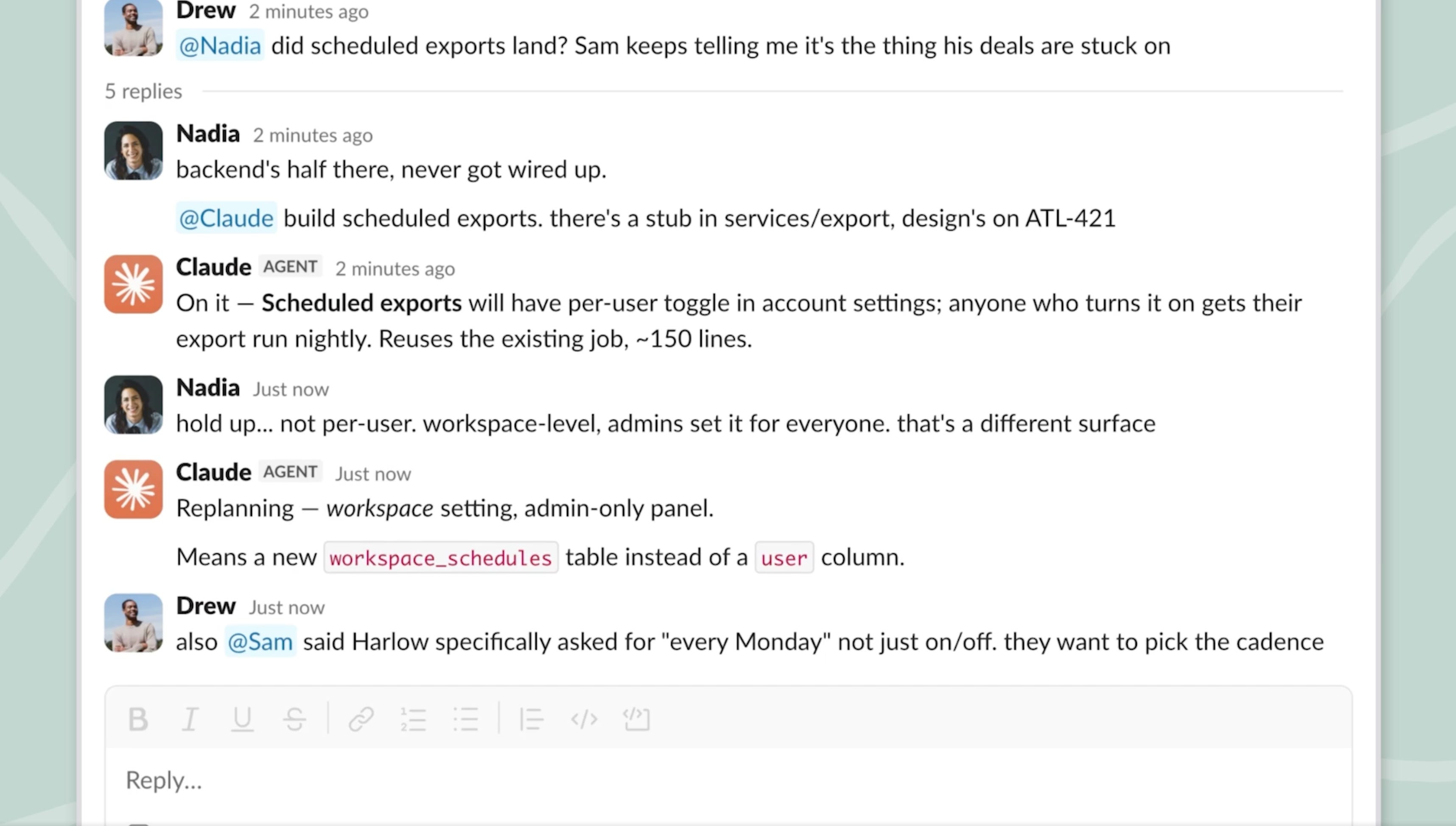
A Slack thread or a Teams chat. Someone asks where the scheduled exports got to. A colleague replies: “backend’s half there, never got wired up.” Then she turns to the next message in the same channel and types: “@Claude build scheduled exports.”
No new tab. No separate chatbot window. No “let me go and prompt the AI.” She handed a piece of real work to a teammate, in the channel where the work already lives, and carried on with her day. And that small, ordinary moment is probably the most organic interface.
The line that reorganised my thinking
I read something recently that stopped me. Antonio Neri, the chief executive of HPE, was asked by IT Pro at the company’s Discover conference in June about the eye-watering bills firms are getting as they run AI at scale. His answer wasn’t about infrastructure.
“I don’t think of AI agents as an IT cost,” he said. “I think about the cost of the workforce, because to me, an agent is no different than any other employee I have to hire.”
My first reaction was: surely this is IT? It runs on servers, it bills in tokens, it lives in the cloud. Of course it’s IT.
Then it clicked, and I couldn’t un-see it. When you hire a person, you pay to onboard them, give them tools, and make them productive. When you stand up an agent, you spend tokens to do the same thing.
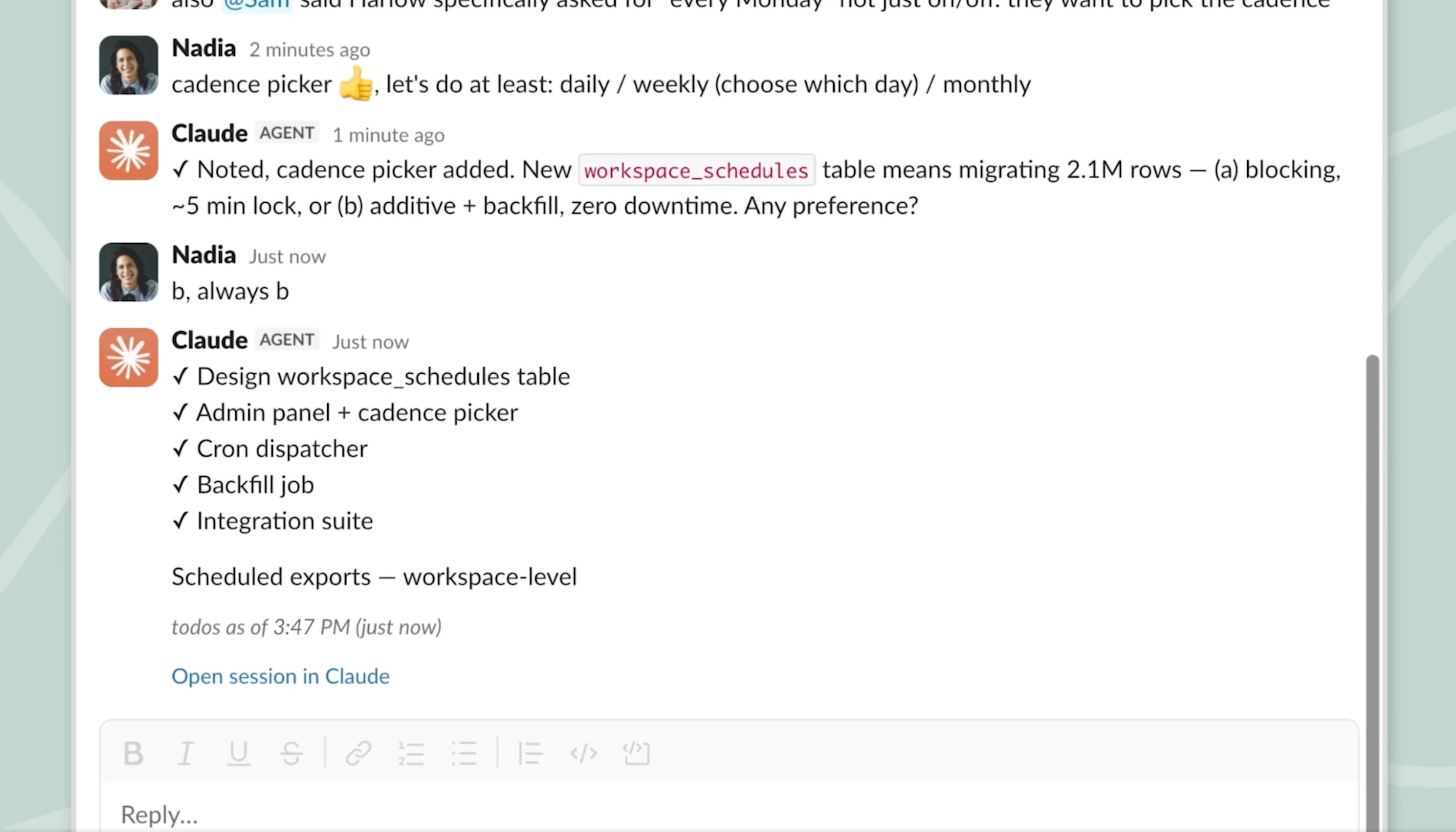
Here’s why that reframe matters. The moment you file AI under IT, it becomes a tool to procure, deploy, and roll out. The moment you file it under workforce, it becomes a colleague to onboard, scope, and manage. Same technology. Completely different set of questions.
Microsoft has started saying the quiet part out loud. Jared Spataro, the executive who runs its Copilot business, has been telling enterprise leaders that token costs should be compared to human labour costs, not software licence costs. The question stops being “can we afford the API?” and becomes “should a person do this, or should an agent?” That is a workforce-planning question. It does not belong in the same review as your laptop refresh.
So what do you actually do with this
If an agent is a colleague rather than a tool, the job changes shape.
You stop “rolling it out” and start onboarding it, which mostly means giving it the context and access a new hire would get in their first fortnight. It’s for a ‘manager’ - which is everyone then - to decide what it actually owns, end to end, rather than letting it hover vaguely over everything. Neri’s framing is useful here: move the human from in the loop to on the loop. Oversight, not doing the work by hand. As he puts it, you don’t get what you expect, only what you inspect.
An agent today behaves more like a contractor than a permanent hire: it arrives for a scope, it bills by the task, you let the contract lapse rather than fire it. And the cost is real and variable in a way a salary isn’t. Question remains open: are processes in a company ready for this?