
6 layers a company needs to become AI-native
Thinking out-loud on best practices from recent AI Mindset session


On one of the AI Mindset sessions I’ve participated in recently, two founders of Codos.ai, Dima Khanarin, ex-McKinsey and Gleb Sidora, ex-Meta shared a framework of a six-layer AI-native architecture from the Codos Playbook.
After some time of processing it, and applying some of my practice to it, I can say it is a solid framework to think of how AI-native organisation might operate. Hence I’ve decided to share it with you. Especially given there are many organisations who don’t yet feel profit growth from having AI, but there is more and more of those, who see a massive impact already.
Shopify tripled revenue per employee without adding people. Spotify’s best engineers stopped writing code in December. Block cut 40% of staff and targets $2 million profit per person.
None of them won by picking a better AI model. Many companies wonder why their chatbot hallucinates. Those who win - build systems and approaches around it. So let’s dive into - how.
Layer 1: Infrastructure
Plumbing. Your AI needs to read and ideally to write data across every system your company runs - CRM, ERP, email, code repos, analytics.
The problem: most company software was built for humans clicking through dashboards. AI agents need direct access - structured data and clean connections, not browser tabs.
Somehow the standard appeared was very quickly accepted in the industry. It is called MCP (Model Context Protocol - think of it as a universal plug like API for AIs, that lets any AI tool talk to any software system). AI gets smarter because of the model progressing, but even more - when it can reach the data.
Without this and next layer hallucinations begin. Unlike a human who says “I don’t have access to that,” an AI often guesses from whatever it has. Confidently. You may not know it was wrong until the damage is done.
Layer 2: Data and context
Raw data is useless at the moment your AI needs it. Re-reading a full call transcript every time it needs one fact is slow and expensive. This layer is where data gets structured and stored for instant retrieval.
Three types of memory matter:
Semantic: facts and relationships. Who is the customer, what did they buy, who owns the account.
Episodic: events with timestamps. Not “we changed the pricing” but “on 14 March the CFO proposed 12%, marketing pushed back, the CEO approved 8%.” Decisions without reasoning are useless to an AI.
Procedural: how things actually get done. The workarounds. The exception-handling that one person does by instinct and has never written down. The knowledge that walks out the door when someone quits.
Without this layer AI follows the right process on the wrong data. I watched this happen in my own system - an agent rewrote a document from scratch because it had no memory of the version we approved two days earlier.
Layer 3: Orchestration
Routing. Which task goes to which AI, in what order, at what cost.
Production systems rarely use one AI for everything. They chain them: one handles routine questions (cheap, fast), another handles complex analysis (expensive, slow), a third monitors quality. When something goes wrong, it escalates.
AT&T restructured their AI from one big model to a multi-agent system with smart routing. Cost dropped 90%. Not by upgrading models - by routing easy tasks to cheap ones.
This is where cost can go crazy massive. This is where i’ve read about many cases how you can burn tons of tokens for system entertaining itself. Recently Paperclip established an agentic organisation you can set up with couple of clicks. Sound idea, but it’s like bringing a team of educated professionals to your business, which they have no clue about. They’ll spent tons of time and - in agentic case - tokens, learning and aligning etc from scratch. One team deployed four agents without stop conditions. Two entered an infinite conversation loop. Neither broke -- the wiring did. The system ran for 11 days, burning $47,000, before anyone noticed. Zero useful output. Short sentence within a skill ‘try 2-3 times, if fails - stop’ could be an easy safety net.
Layer 4: Skills
Simply put, skill is not far from SOP (Standard Operating Procedure). It is literally a text description of what and how to do. A skill file contains: the role, the required inputs, the step-by-step workflow, the hard rules (what to never do), and when to escalate. And you can load it with any AI agent - Claude, ChatGPT, Gemini or some local LLM. When a process changes, the skill updates, and every agent downstream runs the new version immediately.
The shift in AI-native organisations: people stop doing the work and start writing specifications - how to do, what does good looks like, and what is not acceptable.
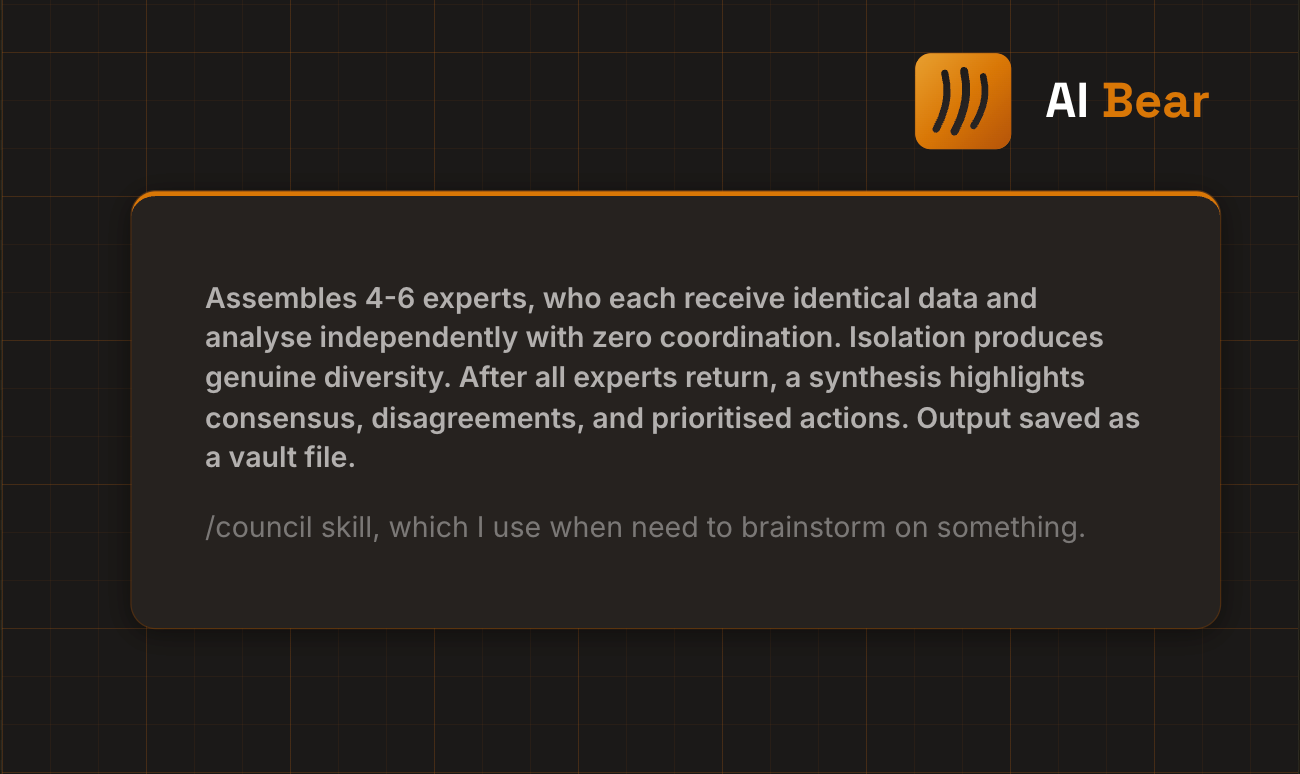
Imagine you have any repetitive process. For sure with enough patience you can sit down and describe it properly. If so - AI can help with it. Example: Ramp runs four AI agents per invoice - one for account coding, one for fraud detection, one for approval logic, one for payments. The fraud agent checks 60+ signals per invoice and flagged over $1 million in fraud in its first 90 days. Each agent runs a different skill. Each skill was tested against edge cases before going live.
Without this layer: agents retry failures forever. If knowledge lives in chat history - it is fragile, one-off, and gets lost every time someone closes a window.
Layer 5: People
Deploying AI without redesigning how people work guarantees failure.
In AI-native organisations people do four things: design the system, build relationships (AI cannot do trust), check the work (human in the loop), and bear the consequences. And from my experience, to check the work is an easy pick. But to design a system - not an easy task, it requires lots of common sense and broad vision. Especially if you want to build a safe from failure and especially external hazards system.
Shopify added AI usage to performance reviews. Block’s CEO told analysts most companies will make similar changes within a year.
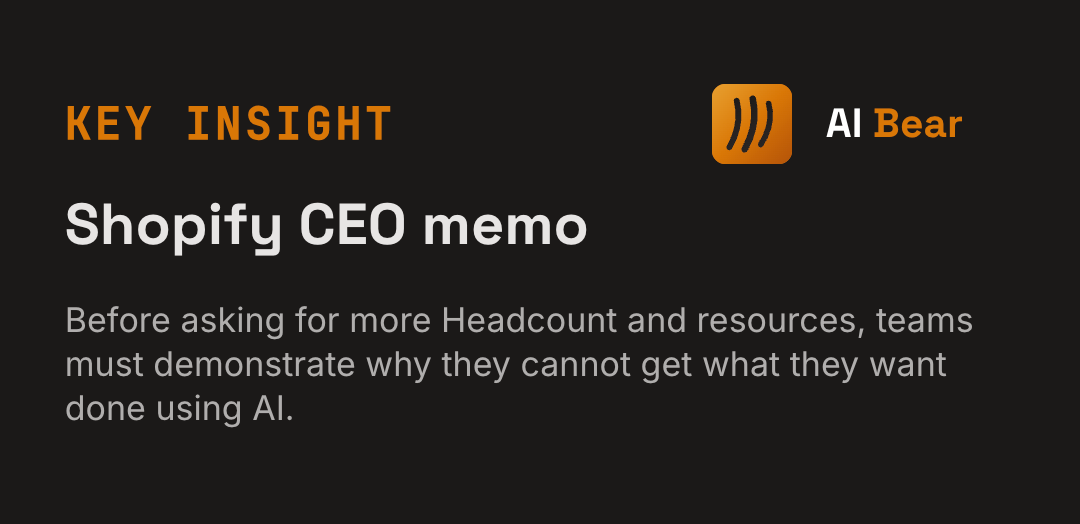
If you’re a senior or top manager, when a team lead reporting to you comes and asks for an extra headcount - are you already challenging them enough, pushing for verification it cannot be automated with AI? Headcount alone is not a parameter of scale anymore.
Layer 6: Governance!
Agents scale intelligence. Without governance, they scale liability just as fast.
Soft instructions like “don’t spend too much” do not work. You need clear and hard ones. Budget caps per agent, rate limits, maximum spend per session, automatic rollback when something fails.
In regulated industries, the stakes are higher. The AI’s chain of reasoning is a legal record. The EU AI Act classifies multi-step agents as high-risk. Singapore published the first national governance framework for AI agents in January 2026. Production systems log everything - reasoning, context, tool usage - because regulators will ask for it.
Remember the $47,000 infinite loop from Layer 3? That happened because there was no governance layer to cap spend. A single budget ceiling would have stopped it in minutes.
From what I see a lot - companies invest in basic models and encourage employees to use AI. But they would limit them in what it can access. Promoting a free Copilot license alone barely would make a company more productive. It’s like giving a car, but with no wheels. And expecting a person to move faster now.